My January “Book Watch” Column For The NZ Herald

Tracey Thorn, Bedsit Disco Queen: How I grew up and tried to be a pop star. (2014): http://www.amazon.com/Bedsit-Disco-Queen-grew-tried-ebook/dp/B0091LLMXI/ – print and ebook 
In reviews and interviews, my favourite book of 2014, Viv Albertine’s Clothes, Clothes, Clothes. Music, Music, Music. Boys, Boys, Boys., was often compared to Tracey Thorn’s Bedsit Disco Queen, so I was keen to read that as well.
And though it is a much less dramatic book than Albertine’s, I enjoyed it. Tracey Thorn is the best part of a decade younger, grew up in musical genres less vivid than punk, and comes across as a much more reserved and contained character. But she writes very well about her life, her stubborn determination to pursue her music, and the career somewhere just south of fame she has maintained.

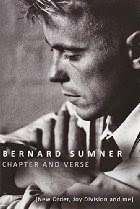
Bernard Sumner, Chapter and Verse: New Order, Joy Division and Me (2014): http://www.amazon.com/Chapter-Verse-New-Order-Division-ebook/dp/B00LI5598Y/ – print and ebook

Though Bernard Sumner does not write as well as Viv Albertine or Tracey Thorn, I still found his memoir fascinating – both because I love the music of Joy Division and New Order, and because his origins in Salford in the 1950s have many parallels with my own in Grimsby a few years later.
New Order were famous for their hedonism, but I was pleased that in this memoir he dials that down to focus more on music and personalities. If you are interested in the music of the post-punk and acid house eras, or if you are keen to read an English perspective that is distinctly Northern, I think you’ll enjoy this book.

Martin Edmond, Winged Sandals (2014): http://rosamirabooks.com/books/index.html#ws  – ebook

This essay, part of Rosa Mira Books’ 10K series, likens taxi drivers to Hermes, the wing-footed messenger of the Gods – hence the title. Winged Sandals may be only 10,000 words long, but it’s a fascinating meditation on taxi driving, writing, the ways they are alike, and the complex relationship between the work writers do to make a living and the effect doing such work has on their writing and on their self-image as a writer.

Artists will identify with Martin Edmond’s struggle to balance his passion with his finances. Whether you’re facing the same struggle, or would like to know what it feels like for people who are, this is recommended.

Julie Hill, ShameJoy (2014): http://www.giantsparrowpress.com/bookshop.html – print

I read ShameJoy on a recent trip from Wellington to Auckland. Reading on planes isn’t usually my thing – I get bored and distracted easily – but that wasn’t the case with ShameJoy – I very much enjoyed both the style and the substance of this book. These deftly constructed, sardonic stories often edge from the real into the surreal and back again, but Julie Hill’s humour is a constant to be relied upon. A fine debut for both the author and for Giant Sparrow Press, another impressive new New Zealand publisher.

Tim Jones is a Wellington author, poet and editor. His latest book is anthology The Stars Like Sand: Australian Speculative Poetry (2014), which he co-edited with P.S. Cottier. Find out more at http://timjonesbooks.blogspot.co.nz/

My Poetry Re-Featured On Helen Lowe’s Blog, Plus New International Spec Fic Poetry Competition

This year, Helen Lowe has refeatured four of my poems on her excellent blog – that is, she’s re-posted four of my poems that she has previously featured on my blog as Tuesday Poems. Here they are:

The First Artist On Mars

Thinning

The stars, Natasha

Angela Carter

Thanks, Helen!

New International Spec Fic Poetry Competition

I’ve recently found out about a major new international competition for speculative poetry, now open for entries (deadline 1 May): https://interstellaraward.wordpress.com/interstellar-award-for-speculative-poetry/

What’s particularly cool is that this competition was partly inspired by the anthology I co-edited with P.S. Cottier, The Stars Like Sand: Australian Speculative Poetry – which gets a nice mention on its “About” page: https://interstellaraward.wordpress.com/about/ – and that it is judged by Jo Mills, one of the contributors to The Stars Like Sand.

If you haven’t already, check out the excellent review The Stars Like Sand received in the Sydney Morning Herald.

The Tuesday Poem

While I’m not posting a Tuesday Poem myself this week, I’m this week’s Tuesday Poem editor over at the hub Tuesday Poem blog, and I’ve selected “This Is Love” by Gemma White. Check it out!

Tuesday Poem: Riverton Beach Poem, by Mark Pirie

(For Tim)

Riverton Beach? I was there once
for a family reunion,
stood on algae-skinned rock

facing the sea, and thought
I was a child playing
by the cool water, sun-tanned

glassy-eyed, out with the family,
though it wasn’t me
that was playing there,

just my father – part of
my history, but, later,
I stood there too, and nowhere

did we skim stones…
My father was older now,
with son-in-tow. Me, learning

the far fragments of past,
feeling his years grow colder,
memory passing like a falling star.

Credit note: “Riverton Beach Poem” is published in Mark Pirie’s chapbook Poems For My Father (The Night Press, 2014), and is available from the publisher for $15.00.

Tim says: I enjoyed Mark’s chapbook very much, and it was an unexpected and very pleasant bonus to be reminded of this fine poem … and its dedication to me! If I recall correctly, Mark wrote “Riverton Beach Poem” in response to my poem “Stones”, which appeared in my first collection Boat People. Here it is:

Stones

Here, standing on the beach, is Dad.
Beach? It’s Riverton, rocks and gravel
from the tarmac to the grey sea’s edge.

Black and white. He holds an oblate stone
scoured out from the distant Alps
milled and rolled by frigid water.

He holds it poised for skimming. Out
it will arc, skip, skip, to fall
and sink for half a fathom.

I snapped him with my old Box Brownie. His eyes
look far beyond the frame I gave him.
Shadowed from the sun, impassive,
they are skipping over the years,
walking the waves to England.

The Tuesday Poem: This week, it’s A lyrebird by Michael Farrell, from Best Australian Poems 2014.

A Great Review For “The Stars Like Sand” in the Sydney Morning Herald

The Stars Like Sand: Australian Speculative Poetry, the anthology I co-edited with P. S. Cottier, has just received a great review in the Sydney Morning Herald:

http://www.smh.com.au/entertainment/books/book-review-the-stars-like-sand-edited-by-tim-jones-and-ps-cottier-20150223-13au1z.html

The reviewer, Peter Pierce, describes the anthology as “One of the most enterprising, unusual and rewarding anthologies of the past year” and goes on to say:

The Stars Like Sand shows us, in the work of the more than 80 poets included, much of that illimitable dark, as well as the flights of fancy and hope that can give brief and brilliant illumination. Seek out this book – admirable, and one of a kind.

As you may imagine, I am very pleased with such a glowing review in a major newspaper!

If you’d like to buy a copy of The Stars Like Sand, you have several options. You can buy it (the links work fine):

– from the publisher (paperback and ebook): https://ipoz.biz/ipstore/index.php…

– from Amazon.com: (paperback and ebook) http://www.amazon.com/Stars-Like-Sand-Australian-Specula…/…/

– from Amazon.com.au (ebook): http://www.amazon.com.au/Stars-Like-Sand-Australian-Spec…/…/

(New Zealanders, if you’d like a copy and are having trouble getting one, please contact me: senjmito at gmail dot com)

Try it – I think you’ll like it!

The February Issue Of Flash Frontier Is Up – And I’m Guest-Editing The April Issue

Flash Frontier is an excellent New Zealand-based online journal of flash fiction. The February issue is now online, full of good fiction such as lead story “The Ear of Dionysus” by Rachel J. Fenton.

Each issue of Flash Frontier has a theme. The theme of the February issue is “whispers”.

I’m happy to say that I’m guest-editing the April issue. The theme for this issue is “iron”, which you can interpret as you wish. I encourage you to submit. Please check out the submission guidelines, and follow them carefully – in particular, there is a strict word limit of 250 words!

This issue is open to international as well as New Zealand writers, and all genres of fiction are welcome. The deadline for submissions is 31 March 2015. I’m looking forward to reading your submissions.

While we’re talking flash fiction, you might also like to check out National Flash Fiction Day 2015 and its associated competition. You get a whole 300 words for that one!

Tuesday Poem: Fitting, by Rhian Gallagher

January: the month of doorways and weddings I think
as I lug the monitor up the stairwell, moving in.
The dressmaker down the corridor snowed under with work
and news from England, Stephen to marry Marco.

In a daze of beginning I set the monitor down
and try to fathom why some plugs are working in some sockets
and not in others. I started from here,
this town where column space goes
to Mr Gunther, Mr Smith, Mr Anderson
barking in prose on bestiality
… dirty foul acts … society in the last stages ….

The building angled where two streets converge
gives the makeshift office a nose, the prow of ship,
scopes a view from the bay to the Alps and back.

With all the space comes scale, somehow I am in it.
The camp table tilts with weight as if the dogmas
come in waves. The current flows and breaks.

Credit note: “Fitting” is from Rhian Gallagher’s collection Shift (Auckland University Press, 2011) and is reproduced by permission of the author. Shift is available from Auckland University Press in print and ebook formats.

Tim says: There are many excellent poems in this collection, but I chose “Fitting” because it’s elegantly written, because it captures an experience I can well relate to, and because of both its surface and deeper content. True to the title of the collection, it’s about shifting, moving in, and captures the strangeness and anxiety of the process; but there is also the deeper anxiety of returning to a place where Messrs Gunther, Smith and Anderson hold sway, a place that feels strange and far from safe.

The Tuesday Poem: Is going strong in 2015 – check out this week’s hub poem by Sugar Magnolia Wilson, chosen by Helen Rickerby, and all the poems and poets linked from the sidebar.

Long Story Short: It’s Novelette Time

Well, what in tarnation is a novelette? According to Wikipedia, and from my dim memory of SF awards story length classification systems, it’s a long short story – or short novella – of between 7,500 and 17,500 words. And I’ve gone and written one, and called it “Landfall”, and I’m very pleased to say that it’s been accepted for publication in Paper Road Press’s first Shortcuts series: the fifth-named of six novellas/novelettes to be included in the series.

Paper Road Press is a relatively new publisher, but I’m impressed by the range of work they are producing – from novels to a range of shorter works. Writers and readers alike should keep an eye out for them!

Tuesday Poem: Icicles, by Barry Smith

In the mountain’s mouth
a prison with bars of ice
these flutes filled
with vodka and sky
bubbles of silence within
released by a single blow
music of stars sent
to the valley below.

Credit note: “Icicles” is from Barry Smith’s collection Always a little further… Poems of mountains and valleys (2004) and is reproduced by permission of the author and publisher.

Tim says: I picked up this collection of Barry’s poems at the Hawke’s Bay Poetry Conference in 2013, and read it late last year. The subtitle very accurately describes the content, and I wasn’t sure I’d enjoy a whole collection that sticks to these two topics – but these are very well-written and evocative poems, and I enjoyed it a lot. “Icicles” is one of the shortest poems in the book; I especially like the elegance of its construction and the way it brings together scientific precision and metaphor.

About Barry Smith: Barry Smith loves telling yarns and writing both prose and poetry. He is a retired scientist with an interest in printmaking and the outdoors. He has spent much time outdoors tramping and trying to get to the tops of mountains. These days especially, he is interested in environmental issues. He writes poetry and has had his work published and included in anthologised collections.

His most recent collection Hard Scrabble was self-published via Blurb and can be seen in preview or purchased at Blurb. There are choices of ebook, soft cover or hard cover ranging from US$5-20. At the same site a couple of his other books can be perused. He also writes a blog called Pukawaparadise in which he writes about numerous subjects – including poetry.

“Icicles” is from his first collection of poems Always a Little Further – mainly poems about mountains and valleys. Obtainable from the author at blchsmiths@gmail.com for NZ$20 including postage.

The Tuesday Poem: Has been back up and running for a couple of weeks, and this week’s poem is “Like a Butterfly” by Jennifer Compton.

Aisle Four At The Local Store: IP Opens Its New Online Shop

My last three books (two of them co-edited anthologies) have been published by Brisbane publisher IP. IP has now opened a new online store. If you’re looking to buy one of my books online, it would be great if you could buy it from IP rather than from a certain large online retailer, because that certain large online retailer imposes deep discounts on publishers that affect both their pocket and mine!

Having just broken every rule of online sales (relentless positivity! always!), here are links to those three books in the IP store. All are available in both print and ebook formats.

Of course, there is lots of other great stuff to check out there as well – including Tuesday Poem member Keith Westwater’s collection Tongues of Ash – and I encourage you to do so.

The Stars Like Sand: Australian Speculative Poetry, edited by Tim Jones and P.S. Cottier (2014)

https://ipoz.biz/ipstore/index.php?route=product/search&search=the%20stars%20like%20sand

Men Briefly Explained (2011) (My third poetry collection. It explains men, briefly.)

https://ipoz.biz/ipstore/index.php?route=product/search&search=men%20briefly%20explained


Voyagers: Science Fiction Poetry from New Zealand, edited by Mark Pirie and Tim Jones (2009)

https://ipoz.biz/ipstore/index.php?route=product/search&search=voyagers%20science%20fiction%20poetry

P.S: The Tuesday Poem kicks off for 2015 this week – I’ll restart posting Tuesday Poems in February.

What I Read In 2014: Highlights from The Year of the Memoir

As in 2013, I read 53 books in 2014, and recorded the details on the social bibliographic website LibraryThing. The highlights of my year’s reading are below, and if you have a deep desire to find out everything I read for the year (albeit I didn’t manage this time to review all the books I read) you can check out my 2014 reading thread on LibraryThing.

As you’ll see from the post below, 2014 was the Year of the Memoir for me.

Best book, best non-fiction, best memoir

Clothes. Clothes. Clothes. Music. Music. Music. Boys. Boys. Boys. by Viv Albertine

Here’s what I tweeted when I finished the book:

“Finished superb memoir #clothesmusicboys by @viv_albertine last night. Wonderful book – entertaining, moving, sad, amusing, profound”

And I don’t need to say a lot more – it was really was that good. Viv Albertine was the guitarist of iconic 1970s English punk band The Slits. When that band broke up, she disappeared into a marriage in which her creativity wasted away. This is the story of how she got to that point and how she resumed her creative life after 25 years’ obscurity. It’s also the story of some very bad (and some very good) choices, taken with a fierce commitment to independence, and the emotional price she has had to pay for that independence.

Along the way, there are fascinating portraits of Sid Vicious, John Lydon, Mick Jones, Ari Up and many other famous figures of the punk era; unexpected connections with musicians and actors as diverse as Steve Howe of Yes and Tom Hiddleston; and the voice of a fine storyteller. This is, so far, my favourite book of 2014.

Memoir runners-up (4 of ’em!)

Bedsit Disco Queen by Tracey Thorn

Earlier this year, I read Viv Albertine’s Clothes, Clothes, Clothes. Music, Music, Music. Boys, Boys, Boys. and enjoyed it very, very much – in fact, it was and remains my favourite book of the year. In reviews and interviews, it was often compared to Tracey Thorn’s Bedsit Disco Queen, so I was keen to read that as well.

And I enjoyed it, but not as much as #clothesmusicboys. Partly that’s because Viv Albertine came of age musically in the 1970s, the same decade in which most of my ongoing music interest began; Tracey Thorne is the best part of a decade younger, and the music genres she has passed through are of less interest to me.

But it’s also because Viv Albertine has led (for both good and ill) quite an extreme life, and her autobiography reflects this – whereas Thorne is a much more reserved and contained character, and so her autobiography is much less dramatic. For all that, it’s still a very worthwhile read.

Testament of Youth by Vera Brittain

The core of this book is Vera Brittain’s account of her service as a nurse during the First World War, during which time she lost her lover, her brother and another close male friend in the fighting. It’s an account that points up the horrible stupidity and futility of that war – men dying in their hundreds of thousands for the sake of a few miles of trench – and of war in general. Not an easy read, but highly recommended.

Hyperbole and a Half by Allie Brosh

If you’ve ever seen the Internet meme that features a half-woman, half-fish hybrid triumphantly holding a broom while saying something like CLEAN ALL THE THINGS!, you owe it to yourself to meet that meme’s originator. This is an autobiography with the emphasis on graphics, as Allie Brosh treats dog ownership, depression, ill-fated family excursions and other rites of passage with strong doses of both humour and common sense, leavened by her amazingly expressive drawings – the people may be stick figures with a hint of the aquarium, but the simple dog and the helper dog come marvellously alive.

Li Na: My Life by Li Na

Li Na, winner of the 2011 French Open and the 2014 Australian Open, is my favourite tennis player – I’m not a huge tennis fan, but I do like her on-court skill, determination and power, and her memorable off-court interviews.

Li Na is a stubborn individualist, and that has frequently led to conflict with the all-encompassing state sports system in which she grew up – conflicts documented in this book. But the core of the book is her relationship with her husband Jiang Shan, a former top Chinese player who gave that up to be the tennis equivalent of Li Na’s caddy – and also, for a time, her coach, something that wasn’t great for her marriage and which they wisely brought to an end.

There are probably stories Li Na could have told about her childhood and her battles with the Chinese tennis authorities that she has chosen not to, but nevertheless, this is an interesting and moving autobiography that you don’t have to be a tennis nut to enjoy.

Other non-fiction runner-up

Dirty Politics by Nicky Hager

Best fiction, best novel

Cloud Atlas by David Mitchell

“Cloud Atlas” isn’t always an easy read, and it’s rarely a comforting one, but I’m willing to go as far as to say that it’s a great novel. I found some of the multiple storylines, which range from past through present to future and cover a range of genres, easier going than others, but connections between those storylines made the book a satisfying whole. As is often the case with science fiction by authors more strongly associated with literary fiction, the science fiction portions of the book don’t offer anything strikingly new in conceptual terms, but in common with the rest of the novel, they are deeply and densely imagined. If you are prepared to give it time and attention, “Cloud Atlas” offers rich rewards.

Runners-up, best novel

The Summer Book by Tove Jansson
Doctor Sleep by Stephen King

Best short story collections

ShameJoy by Julie Hill

I read ShameJoy on a recent trip from Wellington to Auckland. Reading on planes isn’t usually my thing – I get bored and distracted easily – but that wasn’t the case with ShameJoy – I very much enjoyed both the style and the substance of this book. Julie Hill’s sense of humour and the deftness of her story construction both kept me entertained throughout. Well worth reading!

A Quiet Day and other stories by P. S. Cottier

P.S. Cottier is best known as a poet (and also anthologist – full disclosure: P.S. Cottier and I co-edited The Stars Like Sand: Australian Speculative Poetry.) But this collection shows she’s a very good short story writer as well. What I like best about these stories is the way the contemplative tone which introduces the collection shifts smoothly to accommodate the real and the surreal, the happy and the sad. The combination of restrained style and unexpected content means the reader is never sure which way the stories are going to tip, and that’s a good place for a writer to be.

Best poetry collection

Cinema by Helen Rickerby

Wellington poet Helen Rickerby just keeps getting better. Her best work is moving, funny, and thought-provoking without being “difficult” – and Cinema is full of her best work. This collection is all directly or indirectly about the silver screen. It includes poems about the art-form itself, poems about the effect cinema has had on the poet’s life, and a series of poems about the lives of Helen’s friends as if directed by various famous directors. (I’m still hoping for one about my life as directed by a tag-team of Sofia Coppola and David Lean.) Great stuff!

(Note: I read far fewer poetry collections in 2014 than usual because of all the poetry – not listed here – that I read during the selection process for The Stars Like Sand: Australian Speculative Poetry, but Cinema would have been a highlight in any year. I have a whole bunch of unread collections I plan to get to grips with over the summer holidays.)