Tuesday Poem: Immigrant Song, by Sugu Pillay

 
Immigrant Song

no, I will not hijack your life
though I climb every mountain
ford every river
cherish every taonga
this land holds sacred

no, I will not plant a bomb
on the banks of the Avon
though willows weep over waters
too shallow to drown

no, I will not bring Avian flu
to this fair far-flung land
though I flavour my food
with spices from Asia

no, I will not steal your thunder
though you rain on my parade
play political games
impale my tongue

no, I will not say
Canterbury, take my bones
no, not till I’ve seen
the fabled nor’west arch
streak across the sky
a new covenant
for this other Eden

Tim says: Sugu Pillay is a poet, playwright and short story writer. She’s currently focusing on writing plays, and I enjoyed her play “Serendipity”, which I saw at BATS last year.

“Immigrant Song” is one of three poems by Sugu that I included in JAAM 26, which I guest-edited. I too was an immigrant to Christchurch, although, as an immigrant with white skin (and, to be fair, a 2-year-old), my experience was somewhat different.

You can read all the Tuesday Poems at the Tuesday Poem blog.

Tuesday Poem: Inheritance, by Jennifer Compton

Inheritance

1.

The country station was as good as deserted, the train was late.
The stationmaster was keeping to himself, as if he didn’t exist.
Bored, beside myself, I kicked gravel, walked up and down.
It’s always when I’m bored. As if it is not allowed.

My great-great-great grandfather stood up in my mind
as the sky came down and pinned me to the ground.

He was clothed in a book of about 20,000 words.
But sometimes a story won’t become a book.
The book it could be roars through you, like a train
not stopping at a station, bucketing, as loud and brief
as a breath, pushing a turbulence before it, a great wind.

2.

The hobgoblins of local drama, the gossips, cobble
a likely story together – just for the hell of it – for free.
– There was one, who was seen going on a ship,
never seen again. He sailed away, left his kin.
Left his white kin and his black kin.

His father before him left his land, was shipped in chains,
or pressed, or, an illiterate man in a uniform, fetched up
on the island that hangs like a teardrop below the map.
To father him. To father me. Perhaps he made a choice.
He chose to leave the known world, a religious, a madman.

3.

And that man’s son left. I’d like to think that a relative of mine
could see the way things were going, on the beach, scanning
the craft of summoning technology putting in and putting out.
– I’m out of here. I can pass for white in another country.
During the journey I will be reborn as someone else.

And he left his blackfella on the shore and boarded like a white man
with perhaps an Andalusian grandmother, or one of the dark Irish,
worked his passage suspecting there would be a place
that was not so (if he even knew the word) adamantine.

Or maybe destiny picked him up by the scruff of the neck
and put him on the ship. Scurvy had wrought havoc or
flogging had killed more than it cured. Or his curiosity
killed the cat as he checked out all this fabulous machinery,
the latest thing, a teenage boy keen to know the cutting edge,
and then he felt the new world lurch under his feet as it took off,
set sail and, perforce, took him too.

4.

Was he silent in later life, morose at the kitchen table,
as his wife set the bread to prove above the range in a
valley black with punga and fern, dripping, with speaking
water and puffs of mist like smoke and the sound of the trap
in the road and the grown children and their children arriving?
Did he rouse himself to their language he had given them
or did he nod and rise and go out the back to smoke,
did he go to the bottled spirit secreted in the thatch?
To speak with his own. Was there one, a little girl?
White as a toheroa shell on a midden, who always sought him out
and sat next to him speaking and not speaking, with that immemorial
electricity, the pulse, and another, a boy perhaps, who sat far off
and stared and saw it but was afraid. As it gathered around them.

Tim says: I’ve been reading Jennifer Compton’s recent collection Barefoot over the past few days. There are many fine poems in it, but “Inheritance” really stood out for me, so I decided to ask Jennifer whether I could use it as a Tuesday Poem. Then I discovered that Jennifer has just been announced as the winner of the Kathleen Grattan Award for 2010, so that made the request even more timely!

I hope you like this poem as much as I do.

You can read all the Tuesday Poems on the Tuesday Poem blog.

Tuesday Poem: Echolalia, by Saradha Koirala

Echolalia

This morning’s northerly
throws death out in my path
a tiny carcass blown from a rubbish bag
a broken bird
at the bottom of a plate glass window.

A paper bag twists itself into the gutter
a butterfly has its wings torn off.

An old man walks into a bar
moving like shaking out a rug
he smells of wood-smoke and rain.
No
like wet logs burning.

I think of houses I’ve visited
with apple cores browning under beds

a cat licking the ends of breakfast
off a bowl in the sink
and the use of words I wasn’t allowed
words I wouldn’t dare use
and words I’d never heard before.

(First published in Moments in the Whirlwind, New Zealand Poetry Society, 2009)

Tim says: I posted this poem for three reasons: first, I love the word “Echolalia”; second, I love the poem that follows it as much as the word; and third, Saradha Koirala is the guest poet at November’s “Poetry at the Ballroom Cafe” session, which will run from 4-6pm at the Ballroom Cafe, cnr Riddiford St & Adelaide Rd, Newtown, on Sunday 21 November. The session will start with an open mike, followed by musicians Josie & Mary Campbell, followed by Saradha’s guest slot.

I understand that Saradha will read a mix of poems from her debut collection Wit of the Staircase and uncollected poems. I’m really looking forward to it.

You can check out all the Tuesday Poems on the Tuesday Poem blog.

Tuesday Poem: Baxter Between the Wickets, by Michael O’Leary

Tim says: This week, I’ve chosen an anthologised poem that is also part of a novel. Confused? You won’t be…

A Tingling Catch

“Baxter Between the Wickets” is one of several poems by Michael O’Leary in the excellent anthology A Tingling Catch: A Century of New Zealand Cricket Poems 1864-2009, edited by Mark Pirie, which was launched at the Long Room of the Basin Reserve, the test cricket ground in Wellington, on Sunday. I had the great pleasure of reading my poem Swing at the launch.

I was going to spend some time telling you how good A Tingling Catch is – starting with this cover painting of the Basin Reserve by Jocelyn Galsworthy, who, I think it’s safe to say, is the world’s leading cricket artist, and continuing with the selection of poems (mine, of course, modestly excluded!).

But now I don’t have to say how good it is, because Graham Beattie has done so admirably on Beattie’s Book Blog.

Out of It

So let’s move on to the book from which this poem is extracted. Out of It (Earl of Seacliff Art Workshop, 1987) is presently out of print, but Michael is planning to reprint it in 2011 – and if you can’t wait till then, the entire text of the novel is available online. I read Out of It recently, and enjoyed it very much.

The frame of this novel-with-poems is a cricket match at Eden Park between the “Out of It XI” and New Zealand. The two XIs are:

NEW ZEALAND OUT OF IT

1) Dipak Patel Jimi Hendrix

2) Ken Rutherford Monk Lewis

3) John Wright (V.C.) Te Rauparaha (C)

4) Martin Crowe Oscar Wilde

5) Jeff Crowe Jim Morrison

6) Jeremy Coney (C) Alfred Jarry

7) Richard Hadlee Janice Joplin

8) Ian Smith Bob Marley (V.C.)

9) John Bracewell Herman Goering

10) Lance Cairns Lord Byron

11) Ewen Chatfield James Joyce

12TH MEN

12) Martin Sneddon James K. Baxter

Baxter, then, is on the field as a runner for an injured Jim Morrison, and “Baxter Between the Wickets” represents his thoughts as he is called through for three runs by Te Rauparaha, the “Out of It XI” captain. Michael tells me that the “Colin” of the poem is Colin Durning, an old friend of both James K. Baxter and Michael O’Leary.

Baxter Between the Wickets

Morrison hit Chatfield down to deep cover and sent Hemi, grey-hair, grey-beard flying like sails, off for a run. The chief ran like the wind so that Baxter, who was obviously the least fit of the two, was stretched to the limit but made it home for three runs.

“Ha Ha! I bet that got the old cogs in the wheels turning, John. I thought the old guru of the New Jerusalem was struggling a bit there.”

“Yes Dennis, but he made it and his thinking must be matching his physical triumph at this moment.”

Man! He has called me again
From that place inside me – the unworthy

Servant! He called me three times
When I, in my mortal dung heap mind

Would have settled for one
And all the lice in my beard jumped out

For fear of this terrible century’s (looming) speed
Who will torment me now, at night

Who will remind me of Him –
And sin! Which this mad old devil

Commits with every eyelid bat, every thought
Kei te Rangitira o te ngati porangi, ahau –

I stand at the end of the crease Colin
Knowing He only wants what He knows I can do

This poem, and the text which immediately precedes it, is taken with permission from Michael O’Leary’s 1987 novel Out of It.

Finally, this poem also ties back to my post from early October responding to Scott Baxter’s query about the influence of James K. Baxter on New Zealand poetry. Here, that influence is alive and well, if not incredibly happy at having been called through for more than a single!

You can check out all of the Tuesday Poems at the Tuesday Poem Blog.

Tuesday Poem: Take me back to the Bay, by Kerry Popplewell

Take me back to the Bay

1

Take me back to the Bay,
back to the Sixties too —
when what was to come
was certain to be
as bright and wide as the sea.

2

Dust tastes concrete-white;
feet flinch on riverbed and beach.
Heat haze deletes the hills.

Mushrooms erupt in damp paddocks
alongside the distraction of blackberry,
the leaf shoals on shingle roads.

There’s a nip in late afternoon air,
snow on Kaweka. In August
bare willows burn orange.

Pink and tentative, flowers
put out feelers on fruit trees,
querying their cue.

Tim says:

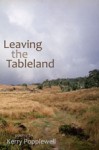
“Take me back to the Bay” is reproduced, with permission, from Kerry Popplewell’s first poetry collection Leaving the Tableland, published by Steele Roberts (2010) and available from the publisher or in selected bookshops for $19.99 (RRP).

My next post this week will be an interview with Kerry Popplewell.

You can read other poems from this collection which have previously been selected as Tuesday Poems, Portrait: Pahiatua, 1942 on Helen Rickerby’s blog, and Leaving the Tableland on the Tuesday Poem hub blog.

Check out all the Tuesday Poems on the Tuesday Poem hub blog.

Tuesday Poem: N.E.V.

N.E.V.

So few ways out of the narrow valley
so many footprints along North Road

Sliding down Blacks Road on the black ice
off to work through the hoarfrost of morning

Walking the dog at Chingford Park
parking the car at Bethune’s Gully

There’s a photo I still look at:
twenty years ago now, four of us under the pines

ready to climb Mt Cargill
on a still afternoon in summer

Twenty years on, and we’re scattered
two of us walking the hilltops of Wales

me in Wellington, wondering
when it will truly feel like home

and the dog in the soil
of a house in North-East Valley

pushing up the daisies, and the frost,
and the life that flickers on the hillside’s bones.

Tim says: This poem is from my first collection, Boat People. It was on my list to read at the Ballroom Café this past Sunday, but I trimmed the list by a few poems, and this was one that I omitted.

In any case, it may mean more to Dunedin people than to Wellingtonians. I lived in Dunedin for seventeen years, the last 12 of them spent at 20 Gillespie St, North East Valley – the “N.E.V.” of the title.

I enjoyed the Ballroom Café reading a lot. I was my usual nervous, distracted self before the session started, and the awful weather didn’t help, but lots of people came along despite the weather, there was an excellent Open Mike section, the musical interlude from the Gracious Deviants was very enjoyable, and by the time I came to read, I was relaxed and ready to go.

My son Gareth came along, and did an excellent job running the book sales table. And, since Lewis Scott couldn’t be there, Neil Furby came down from Auckland to MC, which was definitely above and beyond.

Now I’m looking forward to November’s session, when another Tuesday Poet, Saradha Koirala, will be the featured poet.

You can check out all the Tuesday Poems at the Tuesday Poem blog.

Tuesday Poem: Stones

Stones

Here, standing on the beach, is Dad.
Beach? It’s Riverton, rocks and gravel
from the tarmac to the grey sea’s edge.

Black and white. He holds an oblate stone
scoured out from the distant Alps
milled and rolled by frigid water.

He holds it poised for skimming. Out
it will arc, skip, skip, to fall
and sink for half a fathom.

I snapped him with my old Box Brownie. His eyes
look far beyond the frame I gave him.
Shadowed from the sun, impassive,
they are skipping over the years,
walking the waves to England.

Tim says:

“Stones” was published in my first poetry collection, Boat People (HeadworX, 2002).

It’s one of the poems I’m planning to read at the Ballroom Cafe, Newtown, Wellington, on this coming Sunday, the 17th – the session runs from 4-6pm. I’m going to read a mixture of oldies and newies. If you’re in the appropriate hemisphere, I hope you’ll be able to make it along!

Check out all the details here, and check out all the Tuesday Poems at the Tuesday Poem blog.

Tuesday Poem: Swing

Swing

I’m left arm over
I’m the new red ball
I’m the prodding by the batsman
at the green and sweating pitch.

I’m two slips and a gully
I’m a short square leg
I’m the keeper standing back
and the umpire’s call of “Play”.

I’m the short strides then the long
the rock back and the gather
I’m the front foot thudding down
as the ball departs my hand.

I’m the seam proudly upright
I’m the late movement in
I’m the bat that is nowhere
as the ball hits the pad.

I’m the turn to the umpire
the scream of an appeal
I’m the slowly rising finger
and the batsman’s long walk back.

I’m the hugs I barely feel
as I focus on the moment
when for one ball I decoded
the mysteries of swing.

Tim says: “Swing” is my contribution to the new anthology ‘A Tingling Catch’: A Century of NZ Cricket Poems 1864-2009, edited by Mark Pirie (HeadworX, 2010). I’ve read the anthology, and it’s very good.

Technical note: Before the physics majors who haunt these poetry blogs start commenting on it: yes, I realise the ball won’t swing if the seam is precisely upright, as claimed in Stanza 4, and that the seam should be slanted slightly to the right if the bowler wants to create inswing, and to the left if the bowler wants to create outswing, unless the ball is roughed up enough to reverse-swing, in which case those directions should be reversed. But that would have taken a lot of extra stanzas to explain. What am I, a coaching manual?

Check out all the Tuesday Poems on the Tuesday Poem blog.

Tuesday Poem: Losing Weight

Losing Weight

Losing weight, you
lose your tether to the ground.

The moon awaits, a plate of bone
atop an empty table.

You pass it on its trailing edge
and rise to join the stars.

Tim says: “Losing Weight” was first published in Astropoetica (Summer 2009). Astropoetica is an excellent online journal which I recommend to anyone interested in the stars and poetry.

Continuing that theme a little, “Losing Weight” has been selected for inclusion in Dwarf Stars 2010. Dwarf Stars is an annual anthology of poems 10 lines or under published by the Science Fiction Poetry Association.

Check out all this week’s Tuesday Poems.

Tuesday Poem: Love In A Nutshell, by Renee Liang

This follows my interview with Renee Liang last week.

Love in a nutshell

For Roseanne and Stephen

I wanted to tell you how love grows from a tiny seed
sown at random
like drifting seed pods in summer
you catch and wish upon

how the clash of swords in a gym
sometimes sounds like sudden laughter
and why taking the hit
is better than ducking

I wanted to say
why losing car keys on a black sand beach at midnight
is no problem
if you have each other

and of the warmth of the moon
embraced by punga trees
and the sound of stars when they breathe
in your ear

I wanted to feel again
that moment of the first kiss
the dry softness of lips, the uncertain eyes
the wet palms

and I wanted to remember
lying in bed afterwards
with my finger on the replay button

I wanted to tell you how love tastes like chocolate brownies
how it is made up of two thirds chocolate and one third cream
and how extra sugar is unnecessary
but you put it in anyway

I wanted to ask you
how you found out how to hold hands
when he is so tall and you are so small
but then I realized you grew
to fit each other

I wanted to show you
how to hurl stones as far as you can
on a beach
running after each other

and how to do it again and again until your breath
aches in your chest
and how you can make your belly hurt
from laughing with friends around board games

I wanted to find a scientific reason
why pillows are softer with two heads lying on them
but a search of the medical literature
brings no answer

I wanted to tell you
of the protective embrace of parents
and of how they guide you to the edge
when you are ready to take your first flight

and of how they watch
with fear and love in their eyes
as you step off
and find your wings

I wanted to tell you
of the feel of wind in your hair
and the chime of the wood pigeon
in your own place

and of how four bare feet entwined
can discover another country

I wanted to tell you –

but you already know.

Tim says: “Love in a nutshell” comes from Renee’s third chapbook, Banana. It’s full of good poems, but this one is my favourite. It’s great stuff.

You can read all the Tuesday Poems at the Tuesday Poem blog.