Blog

Tuesday Poem: Take me back to the Bay, by Kerry Popplewell

Take me back to the Bay

1

Take me back to the Bay,
back to the Sixties too —
when what was to come
was certain to be
as bright and wide as the sea.

2

Dust tastes concrete-white;
feet flinch on riverbed and beach.
Heat haze deletes the hills.

Mushrooms erupt in damp paddocks
alongside the distraction of blackberry,
the leaf shoals on shingle roads.

There’s a nip in late afternoon air,
snow on Kaweka. In August
bare willows burn orange.

Pink and tentative, flowers
put out feelers on fruit trees,
querying their cue.

Tim says:

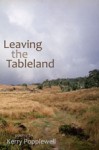
“Take me back to the Bay” is reproduced, with permission, from Kerry Popplewell’s first poetry collection Leaving the Tableland, published by Steele Roberts (2010) and available from the publisher or in selected bookshops for $19.99 (RRP).

My next post this week will be an interview with Kerry Popplewell.

You can read other poems from this collection which have previously been selected as Tuesday Poems, Portrait: Pahiatua, 1942 on Helen Rickerby’s blog, and Leaving the Tableland on the Tuesday Poem hub blog.

Check out all the Tuesday Poems on the Tuesday Poem hub blog.

Welcome To My Blog

Welcome! You’ll find my recent posts listed on the left-hand side of this blog. Since I’m between posts at the moment, here are some of my books, and how to get hold of them.

You should also check out Helen Lowe’s Australia/New Zealand F&SF Author Series, which she’s organised to celebrate the release of her novel The Heir of Night.

That Tingling Feeling

How To Order A Tingling Catch

I had hoped to do a full past about A Tingling Catch, the newly-published anthology of New Zealand cricket poems edited by Mark Pirie, but time has slipped away. I still hope to write that post next week, but in the meantime, I can let you know that A Tingling Catch is an excellent collection which libraries and cricket fans alike should make sure they have.

A Tingling Catch has its own blog, and Mark has now put up a post on How Do I Order A Tingling Catch? It’s worth checking out.

Helen Lowe’s Aus/NZ F&SF Author Series

To celebrate the Aus/NZ publication of her new novel The Heir of Night, Helen Lowe asked a number of Australian and New Zealand fantasy and science fiction authors (plus Julie Czerneda, a Canadian author with strong Aus/NZ connections) to contribute to a series of guest posts on her blog on why they love fantasy and/or SF.

The series as a whole makes fascinating reading. My own contribution, on J. G. Ballard, Kim Stanley Robinson and pitching a tent in the wide space between, was picked up and republished on the big US blog io9, which was a nice bonus for both Helen and myself.

Tuesday Poem: N.E.V.

N.E.V.

So few ways out of the narrow valley
so many footprints along North Road

Sliding down Blacks Road on the black ice
off to work through the hoarfrost of morning

Walking the dog at Chingford Park
parking the car at Bethune’s Gully

There’s a photo I still look at:
twenty years ago now, four of us under the pines

ready to climb Mt Cargill
on a still afternoon in summer

Twenty years on, and we’re scattered
two of us walking the hilltops of Wales

me in Wellington, wondering
when it will truly feel like home

and the dog in the soil
of a house in North-East Valley

pushing up the daisies, and the frost,
and the life that flickers on the hillside’s bones.

Tim says: This poem is from my first collection, Boat People. It was on my list to read at the Ballroom Café this past Sunday, but I trimmed the list by a few poems, and this was one that I omitted.

In any case, it may mean more to Dunedin people than to Wellingtonians. I lived in Dunedin for seventeen years, the last 12 of them spent at 20 Gillespie St, North East Valley – the “N.E.V.” of the title.

I enjoyed the Ballroom Café reading a lot. I was my usual nervous, distracted self before the session started, and the awful weather didn’t help, but lots of people came along despite the weather, there was an excellent Open Mike section, the musical interlude from the Gracious Deviants was very enjoyable, and by the time I came to read, I was relaxed and ready to go.

My son Gareth came along, and did an excellent job running the book sales table. And, since Lewis Scott couldn’t be there, Neil Furby came down from Auckland to MC, which was definitely above and beyond.

Now I’m looking forward to November’s session, when another Tuesday Poet, Saradha Koirala, will be the featured poet.

You can check out all the Tuesday Poems at the Tuesday Poem blog.

Welcome To My Blog

Welcome! If you’re visiting for the first time, here are some of my books, and how to get hold of them.

You should also check out Helen Lowe’s Australia/New Zealand F&SF Author Series, which she’s organised to celebrate the release of her novel The Heir of Night.

Getting Science Fiction And Fantasy Published In New Zealand. Part 2: Novels

This was going to be a post for NZ Speculative Fiction Blogging Week 2010, but Real Life intervened, and I don’t have Sandeep Parikh’s Bollywood-style fight moves (from 1:50) to drive it away.

So, where were we? In Part 1, I talked about the options for getting short speculative fiction published in New Zealand. In Part 2, it’s time to take on the longer stuff: novels.

New Zealand publishers have a track record of publishing speculative fiction novels for children and young adults – indeed, some of our most popular and successful writers in the field, such as Margaret Mahy, write speculative fiction.

But, rightly or wrongly, most New Zealand publishers believe that New Zealanders will not buy adult speculative fiction novels written by New Zealanders. I heard this at first hand from Larain Day, then of HarperCollinsNZ, while taking part in a discussion on RadioNZ (which also featured Helen Lowe) about New Zealand SF and fantasy.

We ran out of time before I could ask the obvious question: if publishers don’t publish NZ speculative fiction, how do they know New Zealanders won’t buy it?

Part of the issue, I think, is that, because New Zealand publishers don’t usually have speculative fiction specialists on their staff, they don’t really know the range that modern science fiction, fantasy and horror encompasses. Ironically, this also means that works that I would classify as science fiction are sometimes published in New Zealand as general/literary fiction. This is especially true of near-future SF, social SF, and satirical SF.

On the other hand, your galaxy-spanning space opera or your continent-spanning fantasy would be doing very well to find a home with a mainstream New Zealand publisher; then again, those are the novels that you have the best chance of selling to an overseas publisher.

But all is not lost! The estimable Random Static Ltd, far from resting on their laurels after publishing NZ short speculative fiction collection A Foreign Country, are now about to publish sf novel Barking Death Squirrels, by Wellington author Douglas A. Van Belle. (What a great title – I wish I’d thought of it! Give it to Smeagol – I wants it! It’s mine, I tells you, my precious!)

I hope Barking Death Squirrels sells lots of copies, both for the sake of publisher and author, and to show that yes, it can be done: SF written here and published here can be sold successfully here. I’m going to interview Doug Van Belle for this blog… just as soon as I get round to sending him the questions.

Incidentally, Random Static has also put out a call for novella submissions. Can they do no wrong?

On The Other Hand: A Defence Of New Zealand Publishers

I’ve been critical above about NZ publishers’ reluctance to publish adult SF. But, when you look at the economics of the publishing business, a certain level of risk-aversion is understandable. It costs publishers a lot of money to publish a book: it has to be bought (i.e. the author has to be paid, which in NZ usually entails a modest advance plus a royalty of around 10% of retail); it has to be edited, and a good editor can make all the difference; it has to be designed; it has to be printed, which involves making a difficult guess about the size of the print run; and it has to be sent to reviewers so they can review it by the release date, and to bookshops so that the eye-catching displays of the book greet the eager buyer’s eye at the time when publicity for the book is at its maximum. (I can tell you from experience that a good review won’t do you much good if your book doesn’t reach the bookshop until a fortnight after the review was published.)

Most books won’t be hits. A few will, and they subsidise the rest. And, in my experience, distribution – the physical process of getting the printed books out of the warehouse and into the bookshops at the right time – is the part of the process that is most likely to break down.

The current model of publishing, distribution and sales has been around since the Great Depression. It still makes surprisingly little use of new technology. NZ publishers are beginning to take steps into print on demand technology and ebooks, but at least until these methods are more established, the big publishers have little option other than to be cautious about the books they choose to publish. There’s a reason so many books are published here about All Blacks, kitchens, and gardens.

If you are interested in these issues from a publishing industry point of view, check out the Weekend Web Reading posts on Helen Heath’s blog. Helen is a poet who works as a publicist for Victoria University Press, so she sees both sides of the story. She also has some very good advice on the use of social media.

Tuesday Poem: Stones

Stones

Here, standing on the beach, is Dad.
Beach? It’s Riverton, rocks and gravel
from the tarmac to the grey sea’s edge.

Black and white. He holds an oblate stone
scoured out from the distant Alps
milled and rolled by frigid water.

He holds it poised for skimming. Out
it will arc, skip, skip, to fall
and sink for half a fathom.

I snapped him with my old Box Brownie. His eyes
look far beyond the frame I gave him.
Shadowed from the sun, impassive,
they are skipping over the years,
walking the waves to England.

Tim says:

“Stones” was published in my first poetry collection, Boat People (HeadworX, 2002).

It’s one of the poems I’m planning to read at the Ballroom Cafe, Newtown, Wellington, on this coming Sunday, the 17th – the session runs from 4-6pm. I’m going to read a mixture of oldies and newies. If you’re in the appropriate hemisphere, I hope you’ll be able to make it along!

Check out all the details here, and check out all the Tuesday Poems at the Tuesday Poem blog.

Guest Post: Book Publicist Helen Heath Answers Questions From Twitter’s South Pacific Book Chat (#spbkchat)

Hello, for those of you that don’t know me my name is Helen Heath. I’m a book blogger, Facebook user and Tweeter. I also work for a small New Zealand publishing house as a publicist.

I came late (i.e. the next morning) to the recent Twitter conversation about book bloggers promoting their blogs and working with booksellers and publishers but I thought I could provide you with some feedback. I pulled out some questions and statements from the thread to form a kind of interview between you, me and the South Pacific Book Chat participants.

timjonesbooks:
Here’s a question: do publishers put too much weight on newspaper/magazine reviews, and not enough on book bloggers’ reviews?

Helen:
I think that old school print media are good at providing publishers with statistics about readership, whereas we have no idea about what the readership of most blogs are. Some book bloggers are taken very seriously in New Zealand such as Bookman Beattie and Quote Unquote.

Having worked many years in bookshops I can tell you that there are a few traditional media reviews/interviews that really make sales for your average New Zealand book. Kim Hill, the New Zealand Listener, the weekend papers, North & South magazine and Metro magazine are the ones that immediately come to mind.

However we are watching the blogosphere carefully and are interested in working with bloggers, especially with “Long Tail” publications.

Amanda467:
Would like to see publishers taking us more seriously. I buy most of my books on the recommendations of other bloggers.

Helen:
I think you will find this will start to happen, it already is to a small extent. Part of the problem is bloggers need to unify and make it easier for publishers to find them and provide readership statistics for them. Often we just don’t know who you are or how to find you.

hennaotoko:
More than that, I think perhaps we need an Asia-Pacific bloggers mailing list/directory (runs and hides too).

Helen:
Totally! I know it’s a big ask for someone to set one up but a professionally put together directory with links, specialist areas and readership statistics would do you all a lot of good and show a united front. Strength in numbers…

timjonesbooks:
What counts as your blog’s profile? Visits? Links? Followers? Link retweets? Comments? Is there one metric that sums it all up?

Helen:
I think all of those things together along with the kudos you hold in your blogging community. There is no one tidy metric.

timjonesbooks:
I imagine publishers (booksellers/consultants) find it hard to measure the ROI (Return On Investment) on social media use. Is that an issue for you?

Helen:
Yes it is. We look at click through rates, website stats and the general level of interactivity. We do want to primarily be part of a community though and that is hard to measure, it’s more of a feeling.

MargReads:
Twitter is definitely very good. I have met people on here when I wouldn’t have found their blogs easily.

Helen:
Yes, I agree. I’ve met a lot of book people and journalists through Twitter and it only seems to be growing. What I’d really like to do is meet more Tweeps who are purely readers.

justaddbooks:
I also find that linking blog posts here helps. Well, a little bit …

Helen:
Yes, for sure. I check my RSS feeds less frequently these days as more people link to their updates. You don’t want that to be your only tweets but some of the best reading I find on the web comes from tweeted and Re-Tweeted links now.

BethFishReads:
Following non-USA publishers and interacting with them on Twitter is definitely good.

Helen:
Yes, please! It’s hard for publishers to know you exist if you don’t say hello. I know some are more responsive than others but smaller publishers seem to be more so.

BethFishReads:
I know there was an Aukland Writers and Readers festival last May — is it yearly? Can bloggers hook up with that?

Helen:
That’s a good idea, the more you do things like that, especially as a group, the better. Just make sure you let the publishers know so they can be suitably impressed! 🙂

hennaotoko:
An Asia-Pacific event, properly marketed, may also help publishers take bloggers in our region seriously.

Helen:
Anything like that is great. Even a blog carnival is start.

MargReads:
So do you have authors local to you? Maybe start a feature on NZ authors.

Helen:
That’s another great idea. Also what about getting in touch with the New Zealand Book Council? They have a very well visited independent website promoting authors and a regular newsletter with a large readership.

BethFishReads:
Don’t forget your local bookstores. If they have author event, attend and blog about it; send link to publisher.

Helen:
More and more independent bookshops have their own websites, use social media and want to make contact with bloggers and tweeters. So yes, make contact and let everyone know what you’ve written. Maybe they might even want to host a tweet-up?

Well, thanks Tim for the opportunity to belatedly partake in the discussion. I hope these answers shed some light on the mystery of the publisher’s brain! Feel free to ask me more questions or contradict me on Twitter. I always follow back booky tweeps and I don’t bite 🙂

Tim adds: The South Pacific Book Chat book discussion takes place on Twitter each Thursday evening at 6pm Japanese time/8pm Eastern Australian time/10 pm New Zealand time. If you join Twitter, you can then join the chat by adding the hashtag #spbkchat to your tweets at that time, and searching for other tweets with the #spbkchat hashtag. You can also see recent #spbkchat tweets online.
Helen Lowe’s “The Heir of Night” is Launched in Aus/NZ Today

… and Helen is celebrating this auspicious day with a great range of giveaways! Head over to Helen’s blog to find out more and enter – but make sure to do it today.

Another aspect of the celebration is Helen’s Aus/NZ F&SF Author Guest Series. I’m honoured to be asked to take part in this lineup of guest bloggers!

Tuesday Poetry Question: Does James K. Baxter Still Influence New Zealand Poets?

A couple of weeks ago, I received an email that I wasn’t sure how to answer. It came from an American called Scott Baxter, and he asked:

“I came across your blog while looking for information on Ithaca Island Bay Leaves … I am interested in New Zealand poetry and a big fan of James K Baxter; is he still widely read in NZ amongst younger poets?”

Scott went on to say:

“I first came across him as we shared the same last name and upon reading his poetry I became a huge fan. I like his use of classical/Christian and later Maori imagery. I wonder how he’s read today; as a Catholic poet, an advocate for the Maori or something else entirely.

I see there is a symposium in November in Dunedin exploring the relationship between Robert Burns (another favorite poet of mine) and Baxter.”

I think that Scott has asked some excellent questions there. Is James K. Baxter still widely read by New Zealand poets? If so, how is he read, and what if any influence do his poetry and his example still have?

What do you think? Has James K. Baxter influenced your poetry, or how you read poetry? Is he still an influence? How about other poets famous in the 1960s and 1970s?