Tuesday Poem: Down George Street In The Rain

Down George Street In The Rain

I talked to the shop signs
down Cuba Street
down Cashel Street
down George Street in the rain.

I sidestepped the shoppers.
Take that, Phil Bennett!
Take that, old lady with a limp
and orthopaedic shoes.

We were as Gods
as eighteen-year-old Gods
who wore our Gore High jerseys to the bottle store —
they wouldn’t let us in.

We smiled upon our people.
People, we said, we walk among you.
Don’t bow, don’t scrape, don’t even step aside.
In gratitude, in wonder, let us pass on

to our destinies, our mortgages
down Cuba Street
down Cashel Street
down George Street in the rain.

Tim says: “Down George Street In The Rain” was first published in broadsheet 3 and is one of the poems included in my forthcoming collection, “Men Briefly Explained”. As the notes to that collection explain, Phil Bennett, the No. 10 in the 1977 British Lions rugby touring team to New Zealand, was famous for his sidestep.

I turned eighteen in 1977.

For non-New Zealanders: Cuba St, Cashel St, and George St are central city streets in, respectively, Wellington, Christchurch, and Dunedin.

Check out all the Tuesday Poems on the Tuesday Poem Blog.

Tuesday Poem: Lockdown

Lockdown

Turbid sky,
uneasy ground.
The face of a guest
turned away at the door.

His hands like roses
hunch a cigarette.
I hear his boots
make full confessions to the rain.

Tim says:“Lockdown” was my contribution to the Winter Readings Poetry Wall in 2007. It is as yet uncollected.

Check out all the Tuesday Poems.

Tuesday Poem: As you know, Bob

As you know, Bob

As you know, Bob, our numbers are dwindling. Genetic factors are to blame: our Y chromosomes, fragile to begin with, have proved uniquely vulnerable to the combination of pollution, rich food and grain alcohol. Only in the pristine environment of space can we truly flourish — but that is the preserve of a lucky few. The rest of us dwindle in protected enclosures, pacified by large-screen televisions, released only to be the subject of scientific research, the unexpected element in reality TV shows, and the providers of the litres of sperm which, carefully husbanded, will ensure the survival of the race.

As you know, Bob, the Testosterone Reduction Act of 2012 solved many of our problems. Fast cars with bored-out mufflers lie rusting in the fields, while young men knit, crochet and garden. Packs of drunk young women no longer prowl nightclubs at 3am. War is the province of old men’s uneasy dreams. Children are dandled on knees, lawns are left unmowed for many successive Sundays, and our tallest peaks are no longer strewn with the frozen bodies of over-ambitious climbers. Only a lack of progress in the more recondite branches of mathematics can be termed a disadvantage.

As you know, Bob, religion proved to be the answer. Give me a boy at seven years, and in due course I will give you a sizeable bill and a New Monastic. Devoted to penury and hardship, they till the fields, herd cattle, and leaven the bread of daily life. In wooden prisons, in draughty halls, they offer shining faces and silent witness. They bank treasure in heaven to set against reproductive defeat. Nothing is to be gained by opposing them. Let us, Bob, walk hand in hand to the river.

Tim says:“As you know, Bob” was recently published in Issue 2 of literary magazine Enamel, edited by Emma Barnes. There is lots of good stuff in this issue; I’m going to post some more info about it in a couple of weeks’ time, but in the meantime, you can buy copies on TradeMe!

This prose poem arose from a conversation about the “New Monastic” movement during a car journey to Whanganui. It will, I hope, take its place in my next collection, “Men Briefly Explained”.

Check out all the Tuesday Poems on the Tuesday Poem blog.

Tuesday Poem: If Looks Could Kill

If Looks Could Kill

When the woman gave me a look
back over her shoulder
I went and crossed the road

it was dark and poorly lit
I didn’t want to scare her
and I didn’t mean any harm

well, none of us do,
but we’re clumsy
we break things and people

that’s the way it is
that’s the fact of the matter
look, we were made that way

and the most they do is look
but they’d have done with us long since
if looks could kill.

Tim says:I was very affected by Men, a powerful poem by Bert Stern which Tuesday Poet Melissa Shook published on her blog last week. It was hard to find the right words for a comment, so I thought I’d post “If Looks Could Kill” this week instead.

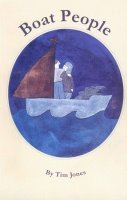
“If Looks Could Kill” was published in my first poetry collection, Boat People (HeadworX, 2002).


Boat People is my first poetry collection. It was published in 2002 by HeadworX, the year after my first short fiction collection, Extreme Weather Events. There are forty poems in Boat People.

Copies of Boat People are available directly from me at the cheap, cheap price of NZ $5.00 plus postage and packing. Please email me at senjmito@gmail.com if you’d like one.

Check out the Tuesday Poem blog for all the Tuesday Poems.

Tuesday Poem: North

North

On Ilkley Moor
I parked me red
Ford Laser hatchback
and gazed to the north.
Rain and smoke stood over Wharfedale.

It was all in its appointed place:
stone houses and stone smiles in Ilkley
the wind on the bleak
insalubrious bracken.

I was waiting for memory
to make the scene complete:
some flat-vowelled voice out of childhood
snatches of Northern song.

For memory read TV:
Tha’ve broken tha poor Mother’s heart
It were only a bit of fun.
Bowl slower and hit bloody stumps.

Tha’ll never amount to much, lad. In cloth cap and gaiters,
car forgotten, I pedal down the hill. Hurry oop
or tha’ll be late for mill. Folk say
I’ve been seeing the young widow Cleghorn.
Well, now, fancy that.

In my invented character
I trail my falsified heritage
down the long, consoling streets.

Tim says:I was born in Cleethorpes, near Grimsby, in Lincolnshire, UK (just south of Yorkshire) and my family moved to New Zealand when I was two.

I returned to the UK in 1989, when I was 30, and spent much of my time there in Grimsby and points north. It was hard not to wonder what my life would have been like if my family had remained “oop North”. TV shows such as Brass provided invaluable guidance.

“North” was published in my first poetry collection, Boat People (HeadworX, 2002).


Boat People is my first poetry collection. It was published in 2002 by HeadworX, the year after my first short fiction collection, Extreme Weather Events. There are forty poems in Boat People.

Copies of Boat People are available directly from me at the cheap, cheap price of NZ $5.00 plus postage and packing. Please email me at senjmito@gmail.com if you’d like one.

Check out the Tuesday Poem blog for all the Tuesday Poems.

Tuesday Poem: Two Kinds of Time, by Meliors Simms

Two Kinds of Time

In some universes
time is experienced as linear.
Individuals move through their lives
cutting a track into their possibilities
and paving it into permanence behind them.
Aware only of the winding road they have chosen,
looking backwards down the line from now to birth
looking forward into the obscure thicket of the future
sometimes, peripherally aware of a bare hint
of what if’s as what isn’t.

In some universes
time is experienced as a plane.
Beings move around their existence
as an intimate landscape
treading and retreading every possibility.
Learning their lives as a farmer learns her land,
choosing every choice
exploring every opening,
until through preference
a rut is worn in the familiar
a dwelling in just one favourite moment or cycle of moments
a resting place from their endless wanderings.

When you sleep
these universes meet in your dreams.
Time leaks across the boundaries
so you can know a little
of the strange ways of linearity or planearity;
whichever is most unfamiliar to you.

Tim says:

Meliors Simms’ “Two Kinds of Time” is one of the more philosophical poems that Mark Pirie and I included in Voyagers: Science Fiction Poetry from New Zealand.

Mark and I weren’t the only ones to recognise its virtues: “Two Kinds of Time” was nominated in the Best Short Poem category of the annual Rhysling Awards for the best speculative poetry of 2009, and is therefore included in the 2010 Rhysling Anthology, published by the Science Fiction Poetry Association.

The Rhysling award winners have just been announced – congratulations to the winners and placegetters – and “Two Kinds of Time” was not among them, but it’s still a great tribute to Meliors and to this poem that it was selected for inclusion in the anthology.

Voyagers cover

You can buy Voyagers from Amazon.com as a paperback or Kindle e-book, or from New Zealand Books Abroad, or Fishpond.

You can also find out more about Voyagers, and buy it directly from the publisher, at the Voyagers mini-site.

Find lots more Tuesday Poems on the Tuesday Poem blog.

Tuesday Poem: Gemini Spacewalk, by Harvey Molloy

Gemini Spacewalk

I was out there
with the flag

and the mission instructions
for the EVA

on my sleeve
but I fell behind schedule

caught by the blue arc
of sky and ocean

against the black
a hurricane-stirred

cappuccino cloud
covered the Gulf of Mexico

except for the transparent
flea of the Florida peninsula

even the small
drops of ice

from the coolant tank
formed perfect worlds

and I thought
of Trey’s letter

from the 365 US Marine
helicopter squadron

a fortnight spent cleaning the aircraft
cleaning weapons

watching dolphins and gulls
chase the ship

days spent writing letters
thinking of Mary Jane

listening to the Shirelles
thinking of home

then back ashore to the hot tent city
of the Da Nang airbase

the talk of operation
Rolling Thunder

towns with colonnades
balustrades

overlooking wide
rain-soaked boulevards

that could be Louisiana!
Just think now

the space
between Hanoi and New Orleans

would be how many
arc minutes

measured by the fingers
of my outspread hand?

***

Harvey’s notes on the poem: I was thinking of Ed White, the first American to walk in space in 1965, and I imagined that he had a relative called Trey who might be in serving Vietnam. So I actually did a fair amount of research for the poem finding out which forces might be in Vietnam at the time–I even read some soldiers letters from 1965. ‘EVA’ is the NASA acronym for extra-vehicular activity; a spacewalk. Ed White died tragically in a pre-launch test for the first Apollo mission.

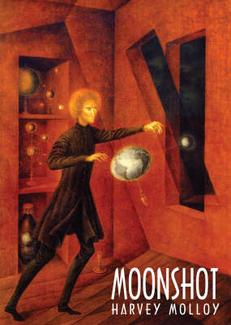
Tim says: This is one of my favourite poems from Harvey Molloy’s first collection, Moonshot. I like the way in which what appears to be a casual reminiscence by the narrator is shaped into a powerful and effective poem. I was 7 when Ed White died, but I was already fascinated by the US space programme – I would have been fascinated by the Russian space programme if I had known more about it – and uneasily aware of the Vietnam War. This poem effortlessly carries me back to those days. Thank you, Harvey!

You can find all the Tuesday Poems on the Tuesday Poem blog.

Tuesday Poem: Homing, by Helen Lowe

Homing

He hears it, in every slap
of wave against wood,
as the ship cleaves water
like a seabird, hears the word
that he has hungered for
through the lost years,
whispered to him now
by the sea as it bears him up,
speeds him on like a lover
to the consummation
of his long-held dream
of home: home, lilts the sea,
soft as a lullaby, and home,
sings the wind, slipping
through rigging, soothing
him to rest, not to wake
even as a clear dawn
pares away night, reveals
rocky shores and a green crag
rising, not even to stir
when they lift him
over the bulwark and down,
splashing through shallows
to leave him on shadowed sand,
tender as a child smiling
in his sleep, and dreaming,
dreaming still
of the long returning.

Published in JAAM 26 2008 (Aug/Sept). Reproduced by permission of the author.

Tim says:

Helen Lowe, who has recently joined the Tuesday Poets, wrote “Homing” as part of her “Ithaca Conversations” series, and I chose it – along with another poem and a story by Helen – for inclusion in JAAM 26, which I guest-edited. I was very impressed by the poems and the short fiction she submitted for that issue, and even more impressed when I found out about her most accomplished novels.

A couple of weeks ago, I published Alfred, Lord Tennyson’s “Ulysses” as my Tuesday Poem for the week. “Homing” is a fitting modern companion to that great Victorian poem.

Helen has now posted a companion post to “Homing” on her blog – well worth reading!

Tuesday Poem: Good Solid Work

Good Solid Work

We’ll laugh at this world one day.
It was all a simulation, we’ll say –
nodding our virtual heads
smiling our virtual smiles –
why didn’t we spot it before?
Nature could never
have come up with the emu
and the hammerhead shark was clearly a clue.

We talk without moving our lips, mind to mind.
Quantum theory’s the clincher.
Don’t sweat the small stuff, so those in charge
left the edges fuzzy
let the smallest particles
roam where they may.

Still, they did some things well –
the roots that riddled the ground
the rush of wind in the pines
the pressure of our children’s hands.
Good work, we’ll say, good solid work
nodding our virtual heads
smiling our virtual smiles
turning our eager faces to the soft electron rain.

Tim says:

This poem, included in my second poetry collection All Blacks’ Kitchen Gardens, was republished in Voyagers: Science Fiction Poetry from New Zealand, edited by Mark Pirie and Tim Jones (Interactive Press, 2009).

It refers to the philosophical proposition, advanced by Professor Nick Bostrom, that we may be living in a computer simulation. You can find more about this on The Simulation Argument, which abstracts his argument as follows:

ABSTRACT. This paper argues that at least one of the following propositions is true: (1) the human species is very likely to go extinct before reaching a “posthuman” stage; (2) any posthuman civilization is extremely unlikely to run a significant number of simulations of their evolutionary history (or variations thereof); (3) we are almost certainly living in a computer simulation. It follows that the belief that there is a significant chance that we will one day become posthumans who run ancestor-simulations is false, unless we are currently living in a simulation. A number of other consequences of this result are also discussed.

The idea that everything we do happens in a computer simulation run by a more advanced civilisation is not one that appeals to me – but that doesn’t mean it isn’t true. One wonders how the characters in video games feel about the world they inhabit.

Voyagers cover

You can buy Voyagers from Amazon.com as a paperback or Kindle e-book, or from New Zealand Books Abroad, or Fishpond.

You can also find out more about Voyagers, and buy it directly from the publisher, at the Voyagers mini-site.

Find lots more Tuesday Poems on the Tuesday Poem blog.

Tuesday Poem: Ulysses, by Alfred, Lord Tennyson

Ulysses, by Alfred, Lord Tennyson (1833)

It little profits that an idle king,
By this still hearth, among these barren crags,
Matched with an agèd wife, I mete and dole
Unequal laws unto a savage race,
That hoard, and sleep, and feed, and know not me.

I cannot rest from travel: I will drink
Life to the lees: all times I have enjoyed
Greatly, have suffered greatly, both with those
That loved me, and alone; on shore, and when
Through scudding drifts the rainy Hyades
Vexed the dim sea: I am become a name;
For always roaming with a hungry heart
Much have I seen and known; cities of men
And manners, climates, councils, governments,
Myself not least, but honoured of them all;
And drunk delight of battle with my peers,
Far on the ringing plains of windy Troy.
I am a part of all that I have met;
Yet all experience is an arch wherethrough
Gleams that untravelled world, whose margin fades
For ever and for ever when I move.
How dull it is to pause, to make an end,
To rust unburnished, not to shine in use!
As though to breathe were life. Life piled on life
Were all too little, and of one to me
Little remains: but every hour is saved
From that eternal silence, something more,
A bringer of new things; and vile it were
For some three suns to store and hoard myself,
And this grey spirit yearning in desire
To follow knowledge like a sinking star,
Beyond the utmost bound of human thought.

This my son, mine own Telemachus,
To whom I leave the sceptre and the isle—
Well-loved of me, discerning to fulfil
This labour, by slow prudence to make mild
A rugged people, and through soft degrees
Subdue them to the useful and the good.
Most blameless is he, centred in the sphere
Of common duties, decent not to fail
In offices of tenderness, and pay
Meet adoration to my household gods,
When I am gone. He works his work, I mine.

There lies the port; the vessel puffs her sail:
There gloom the dark broad seas. My mariners,
Souls that have toiled, and wrought, and thought
with me—
That ever with a frolic welcome took
The thunder and the sunshine, and opposed
Free hearts, free foreheads—you and I are old;
Old age hath yet his honour and his toil;
Death closes all: but something ere the end,
Some work of noble note, may yet be done,
Not unbecoming men that strove with Gods.
The lights begin to twinkle from the rocks:
The long day wanes: the slow moon climbs: the deep
Moans round with many voices. Come, my friends,
‘Tis not too late to seek a newer world.
Push off, and sitting well in order smite
The sounding furrows; for my purpose holds
To sail beyond the sunset, and the baths
Of all the western stars, until I die.
It may be that the gulfs will wash us down:
It may be we shall touch the Happy Isles,
And see the great Achilles, whom we knew
Though much is taken, much abides; and though
We are not now that strength which in old days
Moved earth and heaven; that which we are, we are;
One equal temper of heroic hearts,
Made weak by time and fate, but strong in will
To strive, to seek, to find, and not to yield.

Tim says:

I like dramatic monologues, a form much beloved of Victorian poets, and this is my favourite. What I like about it, apart from the fantastic lines and memorable images – the section beginning “Come, my friends” most of all – is the intriguing contrast between the jut-jawed Victorian heroism of the poem’s surface and the doubt and weariness beneath.

The final line of “Ulysses” stands as Robert Falcon Scott’s epitaph, inscribed on a wooden cross on Observation Hill in Antarctica, but in fact the entire poem, in its mixture of doubt and determination, stands as a fitting epitaph for Scott, the “Heroic Age” of Antarctic exploration, and the classical notion of heroism.

Check out all the other Tuesday Poems here.