Blog

Tuesday Poem: The Translator

Shutting out the torment and the fear
deep into the night’s cold morning hours
I work on my translation.

Improbable, that in another tongue
such lines as these were born,
set down, are vivid on his page

and will not come across to mine.
Two ways to go: the forced rhyme
the flaccid filling phrase

or terse, unrhymed,
trying to capture the meaning
as if that could ever be known.

But something does translate —
a voice from bleak immensities
perfect for nights like these:

the wind’s forgotten murmur,
the war that beggars language
speaking the creole of slaughter.

Credit note: First published in New Zealand Books (December 2004), included in Best New Zealand Poems 2004, and then collected in All Blacks Kitchen Gardens.

Tim says: I have had something of a translation theme going with the Tuesday Poems on my blog recently, one way or another, and furthermore Best New Zealand Poems 2010 has just been launched – congratulations to all those who’ve had work selected! – so I though I would post my poem “The Translator”, which appeared in BNZP 2004. At that time, I also supplied an exuberant set of notes on the poem.

You can read all the Tuesday Poems on the Tuesday Poem blog – the featured poem is on the centre of the page, and the week’s other poems are linked from the right-hand column.

Book Review: The Spectrum Collection, edited by John Prescott – and some thoughts on how horror fiction works


Dark Continents Publishing
is a new publisher of Dark Speculative Fiction, which they define as “Dark Fantasy, Horror (supernatural, Urban, and whatever other twist you can think to put on the genre) Science Fiction with a dark side. Basically, if it makes people squirm, it may well be for us.”

They are not open to unsolicited submissions until 1 May 2011, but they already have several books available, and one of them is a sampler of their current authors’ work, The Spectrum Collection.

Here is what the introduction has to say about The Spectrum Collection:

Welcome to the Spectrum Collection. People have asked us what “Dark Speculative Fiction” is. With this collection of stories from the authors of Dark Continents Publishing, we offer our definitions of that little phrase. Basically, we all write horror. Over the years however, we’ve all developed our own take on horror. You’ll find all our contributions here. From Sylvia Shults’ post-apocalyptic vampire story, to Simon Kurt Unsworth’s story of a cursed home, to the zombie stories contributed by myself and Adrian Chamberlin, you’ll find all the nooks and crannies of the horror world that make up our brand of literature. Our Dark Speculative Fiction. You’ll even find some bloody good poetry by Tracie McBride, Maureen (Mo) Irvine, and John Irvine. Carson Buckingham, Serenity J. Banks, and John Prescott round out the chills with their stories guaranteed to pump up your adrenaline.

So how does The Spectrum Collection live up to these claims? I found that my adrenalin was pumped up quite often, and there were definitely chills, but also that quite a few of the stories didn’t offer that adrenalin and outlet or those chills anywhere to go. In more prosaic language, while almost all the stories were well written, created a nicely scary/spooky atmosphere, and set up a premise that promised excitement and/or fear, a number of them didn’t resolve in a satisfying way.

I’m not a big reader of horror, but I’ve read enough to know that there are two kinds of horror story that work for me: the Stephen King kind, in which the author creates one or a small group of characters the reader cares about, and then puts them in grave jeopardy; and the H. P. Lovecraft kind, in which the characters are much less important and the horror comes from the revelation that vast and inimical cosmic forces wish us all the deepest harm.

(Of course, there are crossovers: Stephen King wrote several Lovecraft pastiches, including “Rats in the Walls”, and “Crouch End”, which memorably melds Lovecraftian horror with the unease of an American adrift in London. For that matter, the great Jorge Luis Borges, whose work often has an element of cosmic horror, acknowledged the influence of Lovecraft on his work and wrote a story dedicated to Lovecraft, “There Are More Things”, published in The Book Of Sand (1975).)

The Lovecraft style is well suited to short stories, because it’s hard to keep up an air of cosmic menace for a whole novel without it tipping over into bathos or silliness. The Stephen King signature style, on the other hand, is better suited to long narratives – of at least novella length – to give time to build up the characters before putting them, and the reader, through the wringer.

Another significant difference between the two styles is that the Stephen King approach usually ends with the survival of one or a few of the characters we care about, while the characteristic Lovecraftian ending has the narrator frantically scribbling the final words of the story as the three-lobed burning eye/giant space octopus/shambling gelatinous horror oozes across the threshold to end story and narrator alike.

Most of the stories in The Spectrum Collection are closer to the Stephen King approach than the H.P. Lovecraft approach, and as none of them are very long, that means that each author has taken on a very challenging task. I felt that a number of the stories did a good job of setting up the characters and the situation, and then fizzled out, either not advancing the story to a satisfying conclusion or coming up with an ending that I’d seen too many times before.

The two stories that made the most satisfying whole for me were “The End” by Serenity J. Banks, and “The Bodymen” by Adrian Chamberlin. “The End” is what Cormac McCarthy’s The Road might be like if retold from the cannibals’ point of view – but it’s not as obvious as that little synopsis makes it sound, and within a general atmosphere of doom and dread, the story still goes to places I didn’t expect.

“The Bodymen” has a tremendous setting for a horror story, a crematorium for dead animals. I once worked for a few weeks at a freezing works coolstore, and I can tell you that they are not great place to be alone at night if you have a vivid imagination. (I still haven’t written my own story based on that experience…). Adrian Chamberlin does a great job of taking his already spooky setting and piling up the horror on top of it. I found the plot a bit confusing in a couple of places, but I was still creeped out by the overall effect.

Other stories I enjoyed included “Wild Goat Curry” by John Irvine, which is short but nasty, and “The Elms, Morecambe,” by Simon Kurt Unsworth; while I think the author could have done more with the premise of this ghost story, the atmosphere of pain and regret is well described.

In the poetry, Tracie McBride’s “Tooth Fairy” isn’t one you want anywhere near your child’s pillow, and “My Sister Doesn’t Live There Anymore,” by John Irvine, is a strong narrative poem.

So, in summary: there are some very strong pieces here, plus some that are underdeveloped, but nevertheless plenty to suggest that the authors represented here, and Dark Continents Publishing, are worth watching out for.

Tuesday Poem: Notes From The Futurist Project

You float like a cloud in trousers
I stand with my cow in the rain

Your poems electrified Russia
Your dams were a hymn to the rain

Your empire crumbled around us
As here and as gone as the rain

The birch tree lies by the roadside
Its branches are wept by the rain

The smoke of my village drifts upwards
Its ashes retreat from the rain

Your red square has entered the market
Its cobbles are slick with the rain

The future lies inside the present
As close as a cloud and its rain.

Credit note:First published in Lynx XXI:1, Feb 2006.

Tim says: This is my one and only published attempt at a ghazal. I don’t think it’s as fleet-footed as the ghazal by Mary Cresswell I posted last week, and in fact, I’d almost forgotten I’d written it – but then poet and photographer Madeleine Slavick kindly sent me an article by John Berger about the Russian futurist poet Vladimir Mayakovsky, which touched on Mayakovsky’s ‘frenemy’ relationship with his contemporary, the Russian peasant poet Sergei Esenin (sometimes rendered as Yesenin).

To simplify greatly, in the aftermath of the Russian Revolution, Mayakovsky tried to build the urban future in his poetry, while Esenin tried to preserve the rural past. Neither succeeded in life, though both did in art. Both died young and by their own hand.

In this poem, Esenin is the narrator, and Mayakovsky is the “cloud in trousers”, as he once referred to himself.

You can read all the Tuesday Poems on the Tuesday Poem blog – the featured poem is on the centre of the page, and the week’s other poems are linked from the right-hand column.

An Interview With Mary Cresswell


Mary Cresswell is a Wellington poet who lives on the Kapiti Coast. She came to New Zealand from Los Angeles in 1970, after having lived in various parts of the US, in Germany, and in Japan. She graduated from Stanford University in California with a degree in history and English literature. She is retired from freelance work (science editor and proofreader) and has spent at least one lifetime in the Wellington workplace.

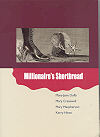
Her first book appearance was with Mary-Jane Duffy, Mary Macpherson, and Kerry Hines, co-authors of Millionaire’s Shortbread (University of Otago Press, 2003). This book is illustrated with collages by Brendan O’Brien, has an afterword by Greg O’Brien, and introduced these four poets to the Wellington scene.

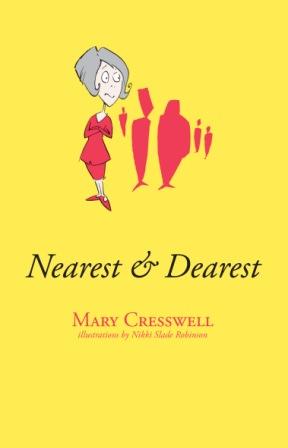
Nearest & Dearest, Mary’s collection of her parody and satiric verse, was published in 2009 by Steele Roberts and is illustrated with cartoons by Nikki Slade Robinson. At that time I interviewed her for the first time.

This is a first for me, Mary – a re-interview, and it indicates that you’ve had success in getting two books published in relatively close succession. Before we get onto your new poetry collection, Trace Fossils, how did things go with your 2009 collection, Nearest & Dearest? Collections of light poetry are still quite rare in New Zealand – do you think that this affected the critical and popular reception of Nearest & Dearest, for either good or ill?

There was no critical notice in NZ, which didn’t surprise me. In the US, I got a very good notice in the well-established print journal Light Quarterly, but the US has a lot of humour written by women – not just Dorothy Parker years ago but many women today. I fondly remember Hen’s Teeth, Crow Station, and lots of good women stand-up comics, but NZ seems to me to have handed written satire and parody over to the boys. (If anyone can tell me otherwise, please get in touch!!)

The publisher and I sold just under 150 copies between us. Most of my sales, many of them multiple copies, were to groups of women who would never browse poetry shelves but who were pleasantly astonished that reading poems could be fun. … On the other hand, I was surprised by a number of people who were nonplussed (embarrassed?) by the contents, didn’t know what to say. Perhaps they had no experience of responding to satire or to sarky women fronting up in print.

Trace Fossils was first runner-up for the Kathleen Grattan Awards in 2009, judged by Fleur Adcock – a notable achievement! Is the published version of the manuscript the same as that submitted for the Kathleen Grattan Awards, or has it changed since then?

It’s exactly the same. The manuscript wandered around some years before that. One reason I am so very glad to see it in print now is that I am starting to have trouble recognising the author – and I’m extremely happy to be on the receiving end of Steele Roberts’ very attractive design and presentation.

Trace Fossils is divided into four sections of roughly equal length. What is the significance of these four sections within the collection? Were most of the poems written with an eye to this particular collection, or did the shape of the collection derive from the type of poems that you had been writing?

The section names are intended to be vaguely geological and to suggest eras, different from each other and long in time. Trace fossils themselves may or may not represent anything, and they are a geological construct, a fascinating one (they also have a very funny classification system – take a look). In the introduction, I nominate trace fossils as a metaphor for our memories of loss and our ways of observing loss.

The poems themselves were written at various times and in various forms: counted syllables, sonnets, prose poems, ghazals, concrete poems, ovillejo, accentual poems, free verse in a variety of lengths and shapes. I assembled them more with an eye to connection than to form; they were none of them written with a particular book in mind.

I spent some time recently talking with a fellow poet about the marketing and distribution of poetry collections – that is, letting people know about new poetry collections, and getting poetry collections to places, whether physical or virtual, that people can buy the books if they wish. I imagine the poets reading this interview, at least, would love to know whether you have any innovative ideas on either of those topics!

I wish. Virtual: I have no clue. Finding more about this side of things is my next project. Physical: The books I have sold were sold by word of mouth – people rang me. Local museums, educational groups and art galleries are sometimes prepared to handle books by local authors, especially if the books can be tied in with current shows, if you do the record-keeping and paperwork, and if you are prepared to donate some of your profit to the organisation. (And if you accept it as a one-off, not a continuing relationship.) I suspect special-interest groups, like writing classes, might be worth trying if you’re prepared to give a reading. I expect any reading is a place to sell books.

Do you have any poetry readings planned around the publication of Trace Fossils – and if so, where can people hear you read?

No, no readings. As you know, there are poets who perform with panache and poets who potter on paper. There is a lot of overlap, I’m glad to say, but I generally prefer not to do solo readings. The main reason for this is that a lot of my poetry is based on word play (both visual and syntactic) and shifts of register. I think that much of this goes west when people hear the poems read out loud and only once. I write page poetry that is to be looked at and re-read. I wish I could bounce and rap, but I can’t.

If you don’t mind me asking, what projects are you working on now?

No, I don’t mind, but there’s nothing all that coherent. It’s been years since I finished the poems included in Trace Fossils, and I have shifted more and more to formal patterns, particularly ghazals (at the moment) but also other repeating structures. I enjoy working in accentual (as opposed to accentual-syllabic) forms. Somewhere down the line I would like to end up with a book built on a skeleton of ghazals but fleshed out with a variety of other poems. I’m still writing light verse and publishing it in the US and the UK, but as always this is a separate department. My main immediate project will be trying to get my head around what might be useful in the world of e-publishing.

Book Availability

Trace Fossils can be ordered from the publisher, Steele Roberts, and is available at independent bookshops.

Nearest & Dearest can also be ordered from Steele Roberts.

Sample Poem

I published Mary’s poem “The Sound Of Now” as my Tuesday Poem this week – check it out!

Tuesday Poem: The Sound Of Now, by Mary Cresswell

 
The Sound Of Now
First line from Marie Ponsot, ‘Reminder’

I am rich. I am poor. Time is all I own.
Time is fair. Time is foul. I am all I own.

Pale hands pick me up and let me down again.
I smell shit and Shalimar. I smell cologne.

No matter on which page you hide, in which book,
I’ll know your name when I can’t recall my own.

A sob?… no, it’s a stab of recognition.
The knife cuts deeper. My thought is all I own.

They called me Marīa when I read Latin.
In this place I have no name to call my own.

Until the end, the sound of one hand clapping —
In the trees, the toucan plays a slide trombone.

Credit note:Published in Ambit 199: 71 (London; Martin Bax and Carol Ann Duffy, eds.) and reprinted in her new collection Trace Fossils.

Tim says: There are two good reasons that this is my Tuesday Poem for this week: first, it’s a fine and most elegantly constructed poem, and second, I am running an interview with Mary – my second interview with her – later this week on my blog. Keep an eye out for it!

You can read all the Tuesday Poems on the Tuesday Poem blog – the featured poem is on the centre of the page, and the week’s other poems are linked from the right-hand column.

A Mainland Double: Tales For Canterbury and the Readers And Writers Alive! Festival

 
Tales For Canterbury

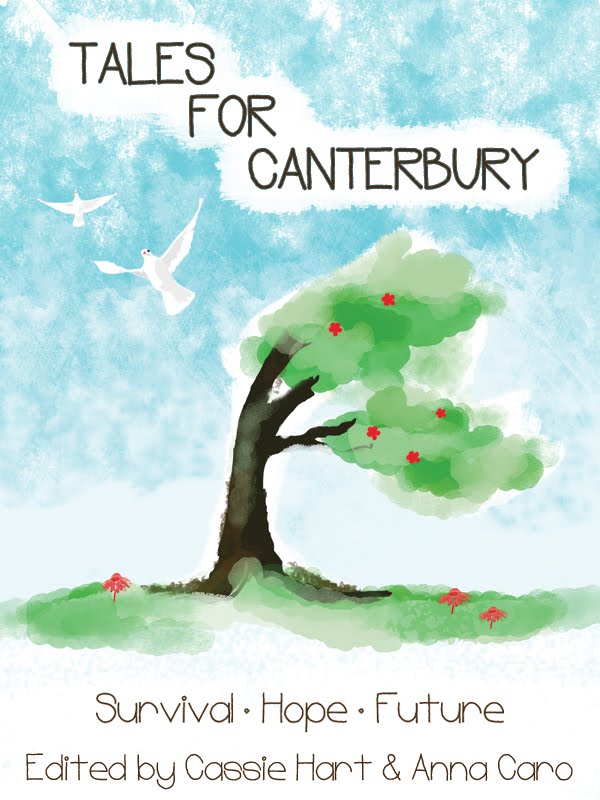
In just over a month since the Christchurch earthquake of 22 February, editors Cassie Hart and Anna Caro have done an amazing job of pulling together Tales for Canterbury, a fundraising anthology to benefit the victims of the earthquake, with all proceeds going to the New Zealand Red Cross Earthquake Appeal.

Tales for Canterbury is now available for pre-order as an ebook (in pdf, mobi, and epub format) and as a paperback – I’ve just ordered my paperback copy. It should be published in April, so you won’t have long to wait for it.

There’s a blog detailing the progress of the anthology, and if you’re not sure whether you’d like one, you might want to check out the list of contributors. There are a few names there you might know – Neil Gaiman, for example; not to mention Janis Freegard, Gwyneth Jones, Jay Lake, Helen Lowe, Tina Makereti, Juliet Marillier, Jeff Vandermeer, Sean Williams, and many, many more fine writers. I am honoured to have a story in such company.

Readers And Writers Alive! Festival (Invercargill)

I lived in Southland between the ages of four and sixteen, and though that’s, well, several years ago now, I have written a lot of poetry about and set in Southland, and have even set a science fiction story in Gore.

So it has always been a private ambition of mine to take part in a Southland literary event, and I’m delighted to say that this ambition is about to be realised. I’m going to be a participant in the Readers and Writers Alive! programme of the Southland Arts Festival 2011, organised by the Dan Davin Literary Foundation, for whom Helen Lowe is currently running writing workshops.

I’m taking part in two events: a poetry reading featuring Joanna Preston, Kay McKenzie Cooke and Lynley Dear on Friday 29 April; and a writing workshop the following day. For that, I’ll remove my poet’s beret and put on my SF writer’s battered propellor beanie to run a workshop on “Writing Different Worlds”. I have to return to Wellington that night, so I’m unfortunately going to miss Joanna’s poetry workshop the following day, which should be excellent.

Reading with friends, and with poets I admire; getting an extended time to run a spec fic writing workshop; and returning to the scene of my youthful (mis)deeds. It’s all good.

Tuesday Poem: Return to Nussbaum Riegel

 
This is a tent.
This is another tent, next to the first tent.
This is a bag full of urine.
This is the vast inconceivable.

This is a rock.
This is another rock.
These are the deposits of a long-vanished glacier.
The frigid wind, whistling over the frigid ice, passing over long
generations of mummified seals making their stealthy way from the sea,
has formed these rocks into the unearthly shapes we call “ventifacts”,
photographs of which form the bulk of my presentation today.

This is me.
This is Guido.
This is Guido, Nails and Barry.
Guido, Nails and Barry
are men with whom I will always share a special
incommunicable
bond.

This is Alfred, Lord Tennyson.
He wrote his famous poem “Ulysses” while visiting Antarctica
on the first “Artists in Antarctica” programme
with Bill Manhire, Chris Orsman and Nigel Brown.
(This is Bill Manhire, Chris Orsman and Nigel Brown.)
Alfred, Lord Tennyson inscribed his famous poem “Ulysses” on a cross
placed on Observation Hill by the survivors of Scott’s Polar Expedition of 1910-1912.
To read it, you need a magnifying glass
and an iron constitution.

This is the Polar Party.
These are the Polar Party’s drinks and nibbles.
The Polar Party went on till 5 a.m.,
then made camp. Scott opened his diary,
wishing, not for the first time,
that he had brought a pen.

Credit note: “Return to Nussbaum Riegel” was first published in Issue 14 of Interlitq, A New Zealand Literary Showcase. This issue has stories and poems by a wide range of New Zealand writers – it is well worth checking out.

“Return to Nussbaum Riegel” will also appear in my forthcoming poetry collection Men Briefly Explained.

Tim says: Nussbaum Riegel is a rocky transverse ridge in the centre of the Taylor Valley, one of the Dry Valleys of Antarctica. The Dry Valleys have been among the main subjects of the New Zealand Antarctic research programme.

You can read all the Tuesday Poems on the Tuesday Poem blog – the featured poem is on the centre of the page, and the week’s other poems are linked from the right-hand column.

Military Technology: It’s Only Cool Till You’re On The Receiving End

 
Twitter and the news this morning are full of excitement about the ultra-cool new heatseeking missile technology being used to attack Libyan Government tanks. Apparently, the French are setting new standards in the science of killing people by remote control.

Plenty of people support the Western intervention in the Libyan civil war. I don’t, partly because I think it’s got a lot more to do with Libya’s ability to produce high-quality crude oil than any concern over the democratic aspirations of the Libyan people, and partly because most such interventions don’t end well for the people they are supposedly trying to help.

But, whether or not people support the intervention – and I acknowledge that there are legitimate grounds for such support – I am immensely frustrated by the way in which ‘war porn’ continues to fascinate people who should know better. It happened in the first US-Iraq war; it happened in the second; and now it’s happening again.

This isn’t a video game. When a missile or a shell hits a tank, the people in that tank are torn apart or burnt alive. And they are people with no lesser or greater right to life than anyone else. So, if you feel tempted to celebrate that cool piece of military technology, imagine how it would be if the priorities of those who launch such attacks changed, and you found yourself on the receiving end.

Tuesday Poem: Men Briefly Explained – the title poem of my new poetry collection

 
Men Briefly Explained

My friend and I are talking to
the most attractive woman in the room.

My friend and I are talking at
the most attractive woman in the room.

We’re talking big: theories, hypotheses,
each wilder than the rest.

How huge our brains must be!
How fit our genes, to allow

such brilliant and superfluous display!
The most attractive woman in the room

smiles at us each in turn.
She is clearly impressed, and her sisters

are smiling too. We are gibbons
swinging through the trees. Chimps

waving sticks and bones. Gorillas
in the mountain forests,

beating hairy chests
as the poacher Time takes aim.

Tim says: “Men Briefly Explained”, which is previously unpublished, is the title poem of my third poetry collection, which will be published by Interactive Press of Brisbane in late 2011. Interactive Press also published Voyagers, the anthology which I co-edited with Mark Pirie, in 2009.

Naturally, I’m very excited that this collection is going to be published – and also very pleased that, all being well, I’ll be doing some joint launch events with Lower Hutt poet Keith Westwater, whose debut collection Tongues of Ash won Best First Book in the 2011 IP Picks Awards.

You can see all the Tuesday Poems on the Tuesday Poem blog (the hub poem in the middle, and all the other poems on the right-hand side).

The Sir Julius Vogel Awards 2011: Nomination Deadline Fast Approaching

 
I have been a very naughty boy.

Well, a slightly naughty boy, anyway. I meant to put up a post about the opportunity to nominate works and people for the Sir Julius Vogel Awards as far back as the end of January, and yet I’m only now getting around to it. Sorry for leaving it so late!

The Sir Julius Vogel Awards are the New Zealand awards for speculative fiction, awarded at each year’s New Zealand national science fiction convention. I was very pleased when Voyagers: Science Fiction Poetry from New Zealand, the anthology I co-edited with Mark Pirie, won in the Best Collected Work category in the 2010 Sir Julius Vogel Awards.

Given that the deadline for nominations is the end of March (to be precise, it’s 31 March 2011 at 8.00pm), I’m going to abandon my always-likely-to-be-unrealistic plan of taking a comprehensive look at potential nominees, and just tell you what I’m going to nominate in a few of the categories. Because NZ speculative fiction is so strong at the moment, there are lots of good books/stories/people out there for you to nominate, and I encourage you to go for it! (Suggestions, in any category, are welcome below in the comments).

First of all, SFFANZ and SpecFicNZ have details of the nomination process. The 2010 awards show the categories.

Semaphore Magazine has a guide to eligible works it has published, and Helen Lowe published a very useful guide to the categories, plus a list of some eligible novels in the Adult and YA categories.

The SFFANZ site has a number of lists of potentially eligible works – look at the works published in 2010 in each list.

So that’s plenty of information to be going on with. Here are the works I’m planning to nominate at this stage – I am sure I’ll think of others when I’m face to face with the nomination form:

– Best Adult Novel: The Heir of Night by Helen Lowe

– Best Young Adult Novel: Tymon’s Flight by Mary Victoria

– Best Collected Work: A Foreign Country: New Zealand Speculative Fiction, edited by Anna Caro and Juliet Buchanan

– Best Short Story: “Back and Beyond” by Juliet Marillier, the final story in A Foreign Country.

Time To Write One Of Next Year’s Nominees!

While you’re making your nominations, take a moment to check out the inaugural SpecFicNZ short story contest, which also closes on 31 March.