Book review: Ruby and the Land of Birds, by Latika Vasil

Ruby and the Land of Birds, by Latika Vasil (Wellington: Korobee Press, 2026). ISBN 978-0-473-79333-3.
RRP NZ$30.00. Available from https://latikavasil.com/shop/ (includes shipping anywhere in New Zealand) and in Wellington, from independent bookshops including Unity, The Children’s Bookshop, Marsden Books and Aurelia Books (soon).
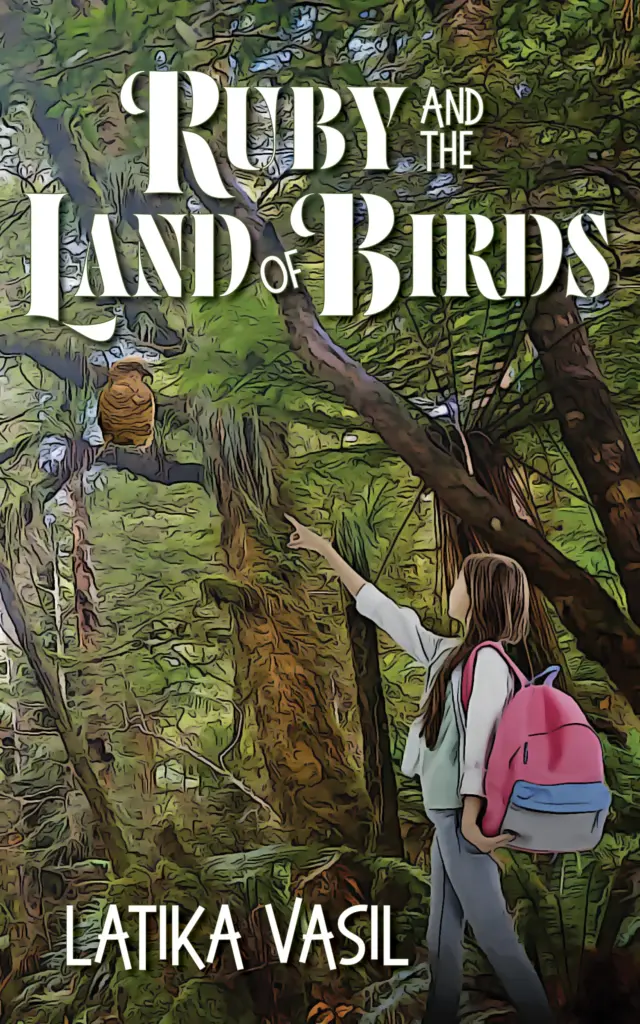
Front cover of Ruby and the Land of Birds, by Latika Vasil. Image shows a schoolgirl with backpack pointing at a kākā in a tree against a background of dense New Zealand bush.

There’s a great deal to like about Latika Vasil’s new middle grade novel Ruby and the Land of Birds, and it starts with the evocative cover: the kākā, the schoolgirl with her bag, and the pre-human forest. On a school trip to Ōtari-Wilton’s Bush, Ruby – struggling to find her feet at her new school – and her classmate Jasper fall through time to the same place a thousand or more years ago, when the forest primeval is populated by birds and other entities that have very varied views about the young interlopers who have just dropped in on them.

Ruby and Jasper are well-written, believable kids – ingenious but impetuous, prone to sudden rows but open to reconciliation, each outsiders in their school, easy to empathise with and like – and I had no trouble getting engaged in their story and wanting them to overcome the obstacles this world places in their path. They encounter a wise mentor who helps their journey, but who can’t shield them from all the dangers they face. In the end, it is their own actions that must save them. 

This is a survival story, but the level of peril is appropriate for the book’s intended audience, while still keeping me as an adult reader eagerly turning the pages. I was cheering for the two children to make it home safe, and while I won’t spoil the ending, I thought it hit just the right note.

If you’re looking for a story that will entertain children of ages 8-12+, especially those who love nature, I can definitely recommend Ruby and the Land of Birds.

Book review: Halfway to Everywhere, by Vivienne Ullrich

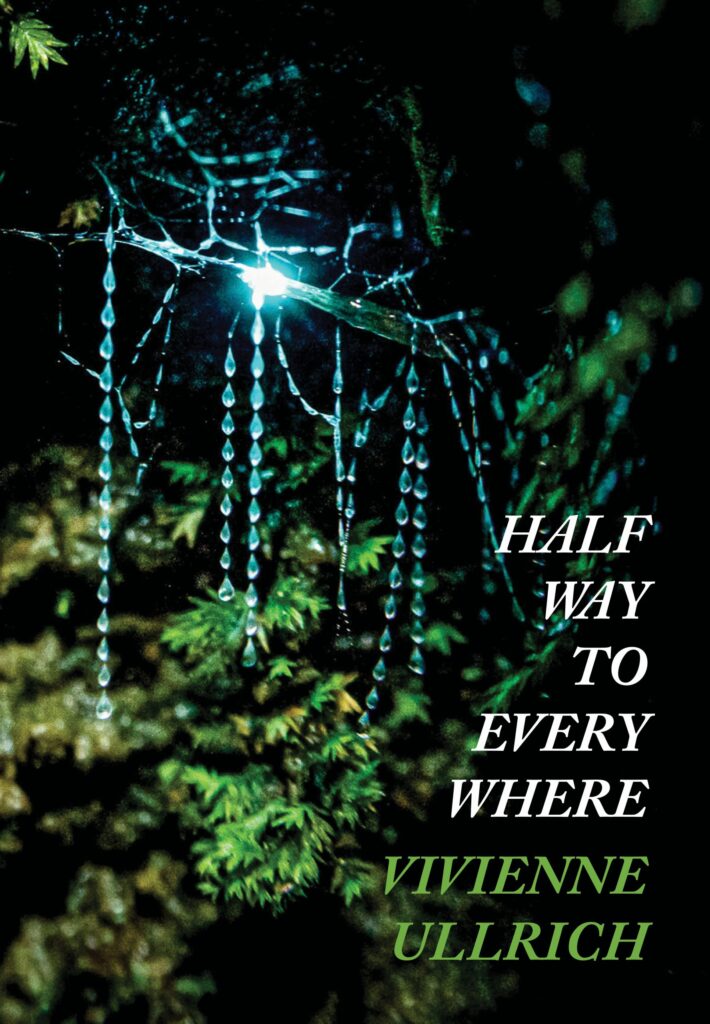
Cover of poetry collection "Halfway to Everywhere", by Vivienne Ullrich

Halfway to Everywhere, by Vivienne Ullrich (The Cuba Press, 2024), 70 pp. Available from https://thecubapress.nz/shop/halfway-to-everywhere/

Halfway to Everywhere is Vivienne Ullrich’s second poetry collection, and I’m impressed. The poems in Halfway to Everywhere show a lot of formal ability as a poet, and as the collection goes on, that formal elegance was increasingly matched with subject matter that engaged me emotionally.

Many of these poems take as their subject matter art, historical figures and fairy tales. Mary Queen of Scots, Little Red Riding Hood, Scheherazade, Jack of “Jack and the Beanstalk” fame and the artist Max Gimblett all put in an appearance, as the poet invites us to see the world from their points of view.

“Mary Queen of Scots” (p. 24) is a good example of these poems. It begins:

I die tomorrow. It is a simple thing
and yet it clamps my belly.
I pray for a clean stroke
and dignity.

From “Rutu” (p. 18), a poem inspired by Rita Angus’ painting of the same name:

… how is it we gift
this month with myths of rebirth, when an eye
towards our cross of stars would signal time
for harvest, time for tuning in to self.

I was very impressed by the quality of both the poetry, and the thought that had gone into the poetry, in Halfway to Everywhere. I did find that – perhaps because of the number of poems about artworks and historical figures – it took about half the collection before I started to engage with the poems emotionally – in other words, to connect with them as well as be impressed by them. But as I continued reading, I found poems that spoke to me more directly, like “Footprint” (p. 62):

I hear you. No doubt
it is different in my skin.
I am my peculiar set of molecules
after all, and I have the benefit of
context and the words I left out.

This skill in addressing multiply points of view comes to fruition on my favourite poem in the collection, “Little Red Riding Hood” (p. 48), a retelling in which the dramatis personae all get a turn as protagonist: the wolf, the huntsman, the grandmother, and the girl herself. This poem combines formal ability and sly wit in a way that works extremely well. An excerpt won’t do it justice – check out the whole poem!

Vivienne Ullrich is a talented, clever, thoughtful poet, and as I read through this collection, I found her poems and her poetry sneaking up on me. Halfway to Everywhere is a good place to be.