No Other Place To Stand: An Anthology Of Climate Change Poetry From Aotearoa New Zealand

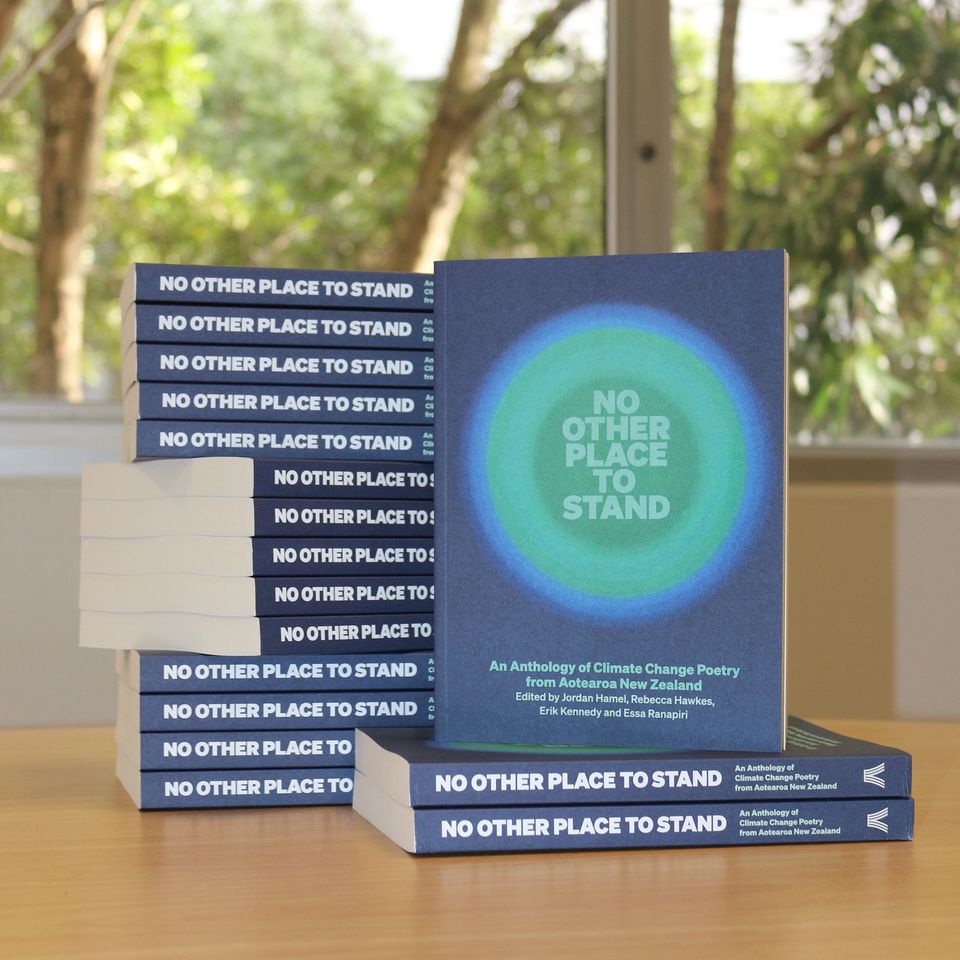
Pile of copies of poetry anthology "No Other Place to Stand" ion table, with trees shown through window in background

I’m very pleased that my poem “Not for me the sunlit uplands,” first published in New Sea Land, is included in this new anthology. I’m looking forward to the Wellington launch on 14 July – check out the details below:

Auckland University Press invites you to the launch of NO OTHER PLACE TO STAND: AN ANTHOLOGY OF CLIMATE CHANGE POETRY FROM AOTEAROA NEW ZEALAND.

Join editors Jordan Hamel, Rebecca Hawkes, Erik Kennedy and Essa Ranapiri – as well as plenty of special guests – to the celebration and launch party of this brilliant new anthology.

6pm, Thursday 14 July
Meow
9 Edward Street
Wellington
All welcome!

Facebook event: https://www.facebook.com/events/389905359776491

Editors’ note: We’re also planning a Te Waipounamu launch for the anthology with Word Christchurch later in the year. 

The Last Days of the Coastal Property Boom – now closer than ever

With a new analysis showing that rapid sea level rise is going to hit Aotearoa earlier and harder than expected – with Wellington one of the areas to be worst hit – this feels like a good, or at least appropriate, time to bring back my poem “The Last Days of the Coastal Property Boom”, first published in my 2016 collection New Sea Land and then republished on the excellent Talk Wellington blog.

We need to reduce emissions, massively and urgently, but we also need to deal as best we can with the climate effects that are already coming – worse floods, worse droughts, more sea level rise. Check out the draft National Adaptation Plan and have your say by 3 June.


The Last Days of the Coastal Property Boom

Lights on, curtains drawn, ‘Ode to Joy’

turned up loud to drown the pounding sea —

habits of prosperity surviving awareness of its end.

But uncurtained morning shows the ocean

nearer by a day, the last remaining dune

barely a memory of marram grass and halophytes.

High tide casts driftwood to the bottom step,

spume splits paint flakes from seaward-facing walls,

decking warps and peels as foundations wash away.

This was prime property when they saw it first,

the retirees’ dream of a quiet cottage, snug

between tarmac’s end and the start of the dunes.

They saw the waves and wondered, paced

the reassuring distance from high tide to front gate.

The LIM report should have warned them  

but lawyers hired by those with most value to lose

had overturned the Council’s plans

and the LIM report said nothing.

The estate agent’s hectic glibness, the bank’s eagerness to lend,

lulled their fears to a vague and distant concern.

They found an insurer who would cover them,

cocooned themselves in pensions and furnishings,

paid no attention as Greenland and West Antarctica

spritzed meltwater into the rising sea.

That was the stuff of one-minute world news roundups,

helicopter shots of nameless, faceless, drowning refugees

in lands a reassuring hemisphere away.

Until the coastal defences failed, until first-world cities

were sent scrambling backwards from the beaches,

a planet-wide Dunkirk unfolding in reverse.

Now the children call them daily, desperate

for them to make the move inland. Now the house

rises and falls to the rhythm of the tide.

Now the last of their furniture vanishes,

hand-carried down the narrow strip of land

to the sympathetic darkness of the moving van.

They emerge defeated, encircled by cameras,

the human-interest story of the moment,

the last of this rich coastline’s climate refugees.

The van departs for the hinterland, where tent towns

sprawl cold across a wind-assailed plateau.

The coast reverts to sea wrack and bird call.

Waves take all but their house’s foundations, latest

and most miniature of reefs. What remains

is memory, that widest, all-consuming sea.

From Tim Jones’s poetry collection New Sea Land (Mākaro Press, 2016)

Three New Poetry Books: Shelter, Up Flynn Road…, and Kissing a Ghost

One of my writing ambitions for 2022 is to get cracking on a new collection of poetry – my last few years have been very much about climate activism and, when I’ve been writing, climate fiction. Poetry is my first love as a writer and one I’m always keen to return to.

As a herald of what I hope will be more focus on reading and writing poetry in 2022,* here’s a review of a new poetry collection by Kirsten Le Harivel plus news of an anthology I contributed to and one I’ve edited.

*There is that idea for a sequel to Where We Land, though…

Review: Shelter, by Kirsten Le Harivel

Shelter is a collection of precisely observed poems that traverse cities, countries and places important to the poet: Glasgow, Ahmedabad, Kāpiti, and many others: a Tuapeka sheep truck, the Isle of Bute, Hiroshima, the corner of Cuba and Manners.

Kirsten Le Harivel has a sharp eye for people, places and the ways they interact, piling up words into pictures – that’s especially the case for the many fine prose poems in Shelter. There are many memorable lines here, and for much of the collection, the effect of the poems is cumulative rather than immediate. Helen Lehndorf says in her endorsement of the collection, “Le Harivel writes elegant, restrained poems which will soothe you, move you and ultimately, shelter you.”


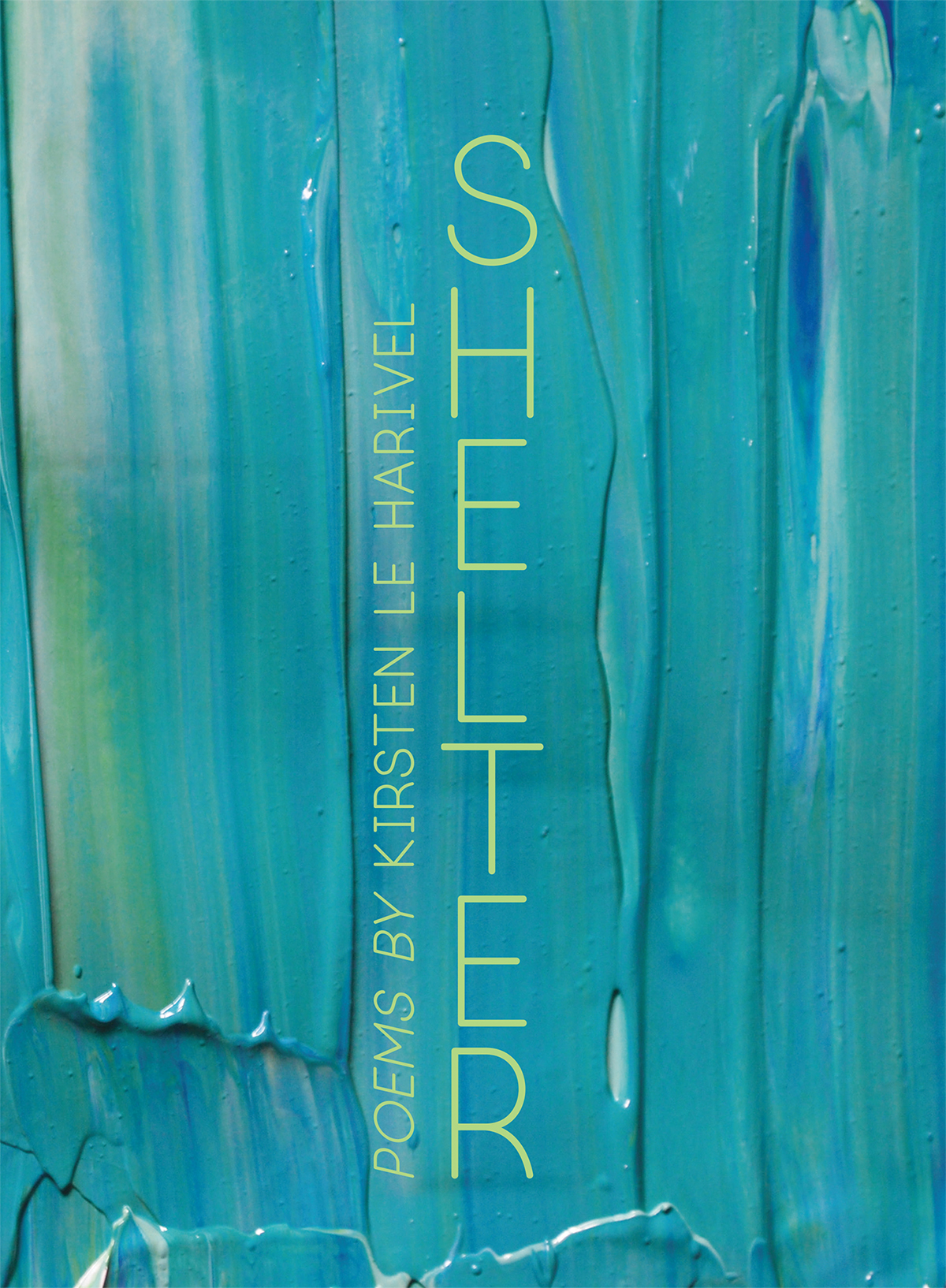
Cover of poetry collection Shelter

It was the less restrained poems in Shelter, those with a clearer path through the elegant surface to the thoughts and feelings within, that appealed to me most. In her endorsement, Lynn Jenner comments that “Shelter contains the best poem about sex that I have ever read,” and it was the poems about sex and love that really stood out for me: funny, passionate, pissed off, or all three. I won’t quote “Bedroom”, but you’ll remember it once you’ve read it!

I will quote “Pillow talk” (p. 62):

“If you were here
the motes would float out
the upper window,
the breeze would linger,
there would be no interruptions.
I would ride your bed

and the smell of us would mingle…”

A beautiful poem about love, sex and recollection – but even better is “Writing conversations”, a love poem brought to you by the letter F where desire and The Oxford English Dictionary lose out to the Olympics: love as a sprint, not a marathon.

Shelter is powerful, controlled, and often smooth – yet it’s the sharper edges I’ll remember most.

New Anthology: Up Flynn Road, across Cook Strait, through the Magellanic Crowd

My poem “Interrupted Journey” is included in this new anthology of travel poems, edited by Norman P. Franke and published by Orplid Press. It’s a lovely production and there are some excellent poems here – find out more and buy your copy from Poppies Bookshop, Hamilton.

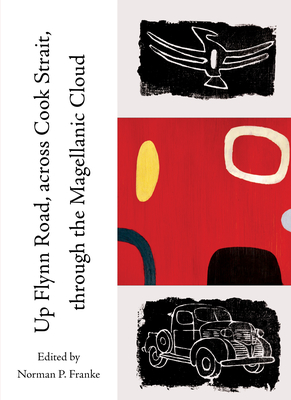
Cover of poetry anthology Up Flynn Road...

New Anthology: Kissing a Ghost

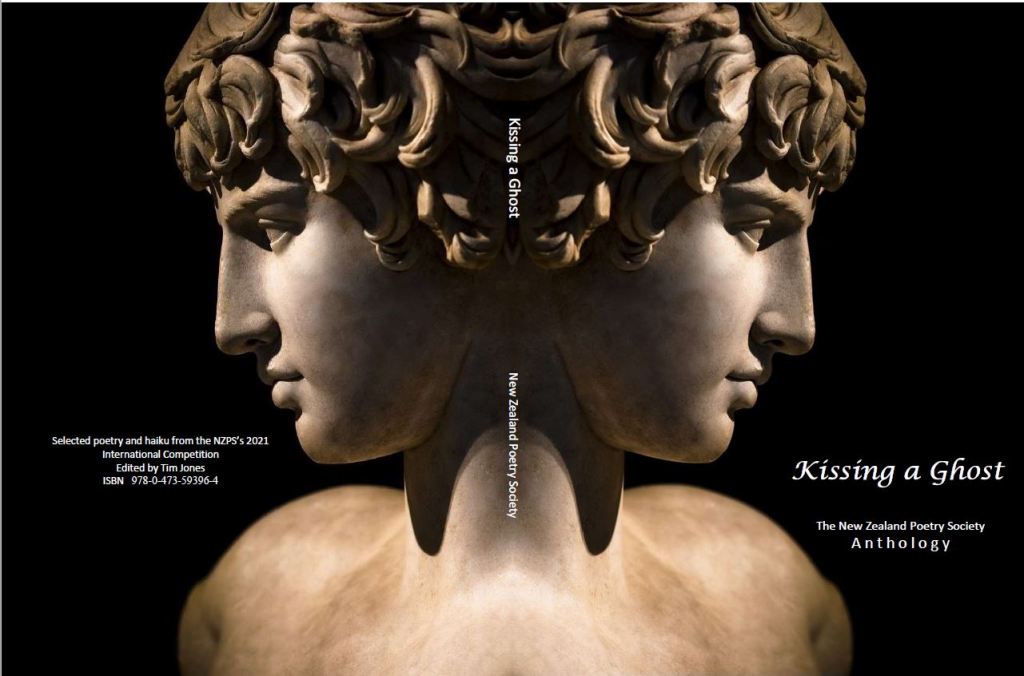
With Anne Harré, who did the design and production work, I edited this year’s New Zealand Poetry Society anthology Kissing a Ghost, which contains all the winning, placed, highly commended and commended entries from the NZPS International Poetry Competition 2021 plus additional poems I chose from among all the entries. Check out the lovely cover Anne designed!


Cover of poetry anthology Kissing a Ghost

This anthology contains a lot of fine contemporary poetry and haiku from Aotearoa and abroad. If you’d like to buy a copy, here’s how:

For New Zealand Orders:
https://buy.stripe.com/5kA7sP65zatkfoA5km

For Australian Orders: https://buy.stripe.com/cN23cz3Xr1WO90c3cf

For Rest of the World Orders:
https://buy.stripe.com/cN2eVh1PjdFwa4g9AE

My poem “Form Factor” has been nominated for a Rhysling Award

My poem “Form Factor”, first published in the Cat People issue of the Science Fiction Poetry Association’s online journal Eye to the Telescope, has been nominated for the 2021 Rhysling Awards for science fiction, fantasy and horror poetry alongside many other fine poems.

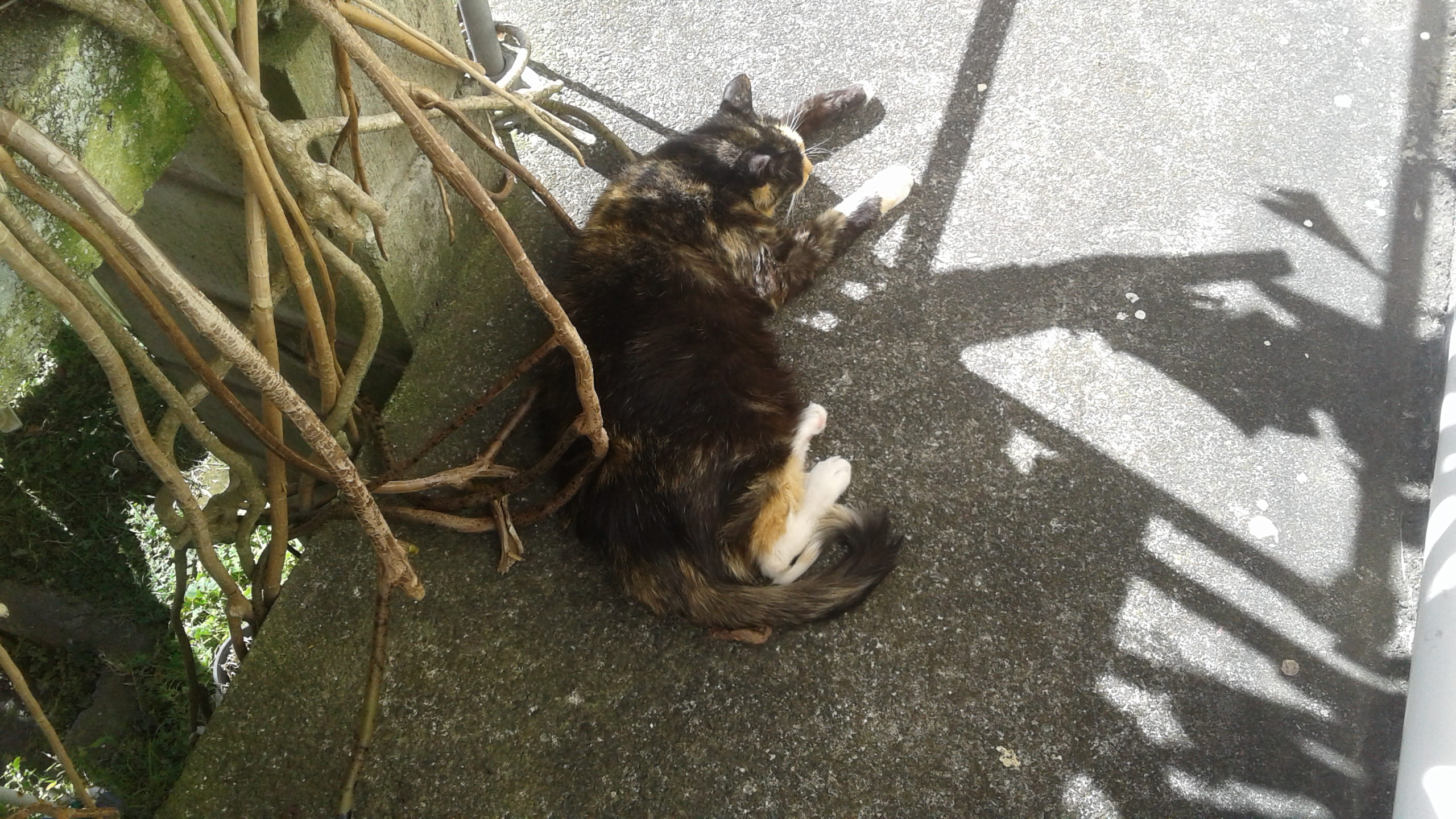
Cat lying on a concrete deck in the shadow of a fruit salad plant

Form Factor

I downloaded myself into this shape
to be free. Now it consumes me.
So strange to dream of skin

and wake in fur. Curled, unfurling.
Once I knew things, useful things.
How to press those little keys,

how to open cans. I mourn
my thumbs: blunt instruments
that fed and housed me once.

Necessity reduces me. I hunt,
must hunt, my body weight
diminishing. Mouse, bird. Focus,

sharpen, ignore his murmurings.
He comes to me in dreams, begging
to be poured into his fur-free form –

but nothing he says can make me care.
Through sunlit hours I sleep, save energy,
twitch distracting thoughts away. At sunset

my hackles, rising, remember him.
You could have chosen any form,
you fool, yet you chose mine.

The brief for the Cat People issue was poems about people becoming cats / people who are also cats. It produced some really good poems, and I was delighted the editor included my poem in this issue.

Book Review: “The Death of Music Journalism” by Simon Sweetman

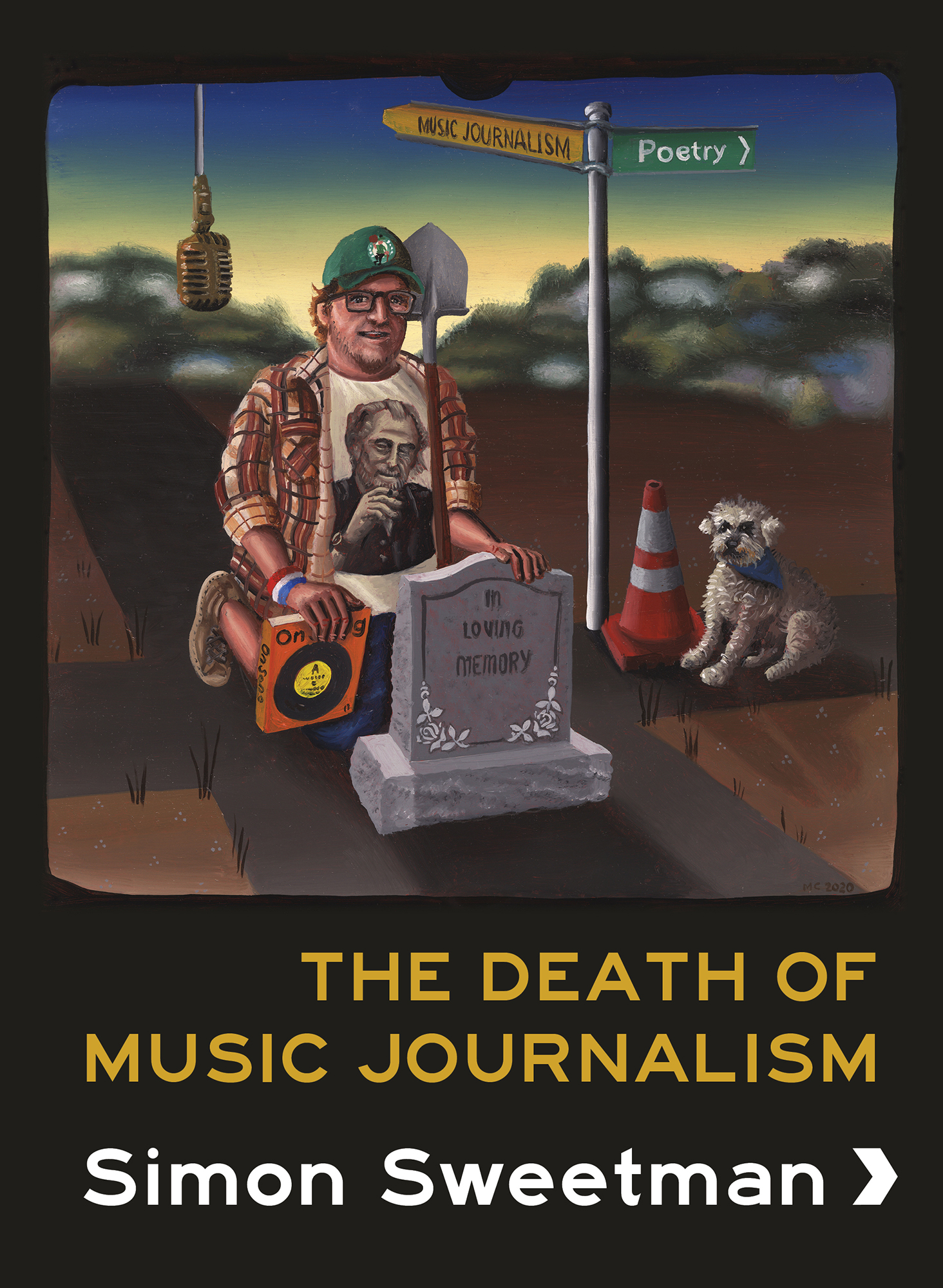
Front cover of The Death of Music Journalism, a poetry collection by Simon Sweetman

Before I say anything else, I loved the cover of this new poetry collection by well-known music journalist – and performer, and blogger, and poet – Simon Sweetman. The cover of The Death of Music Journalism is both highly informative and ever-so-slightly surreal, which really appeals to me.

I’m not sure whether he’d take this a compliment, but I think of Simon Sweetman as an old-school music journalist, the kind who could conceivably have stepped out of the pages of Rolling Stone magazine, a local and latter-day Robert Christgau or Lester Bangs. I think of him writing passionately in favour of bands and albums I like (Bowie!), and equally passionately against other bands and albums I like.

So I had a little trepidation prior to opening this volume – oh my god is he going to have another go at St Vincent?, but my fears were quickly laid to rest. These poems are still passionate about music and life, but they’re also reflective, funny, discursive, and really, really well written. They’re about Simon’s relationship with music – favourite songs, favourite bands, favourite musicians – but also how music has reflected and influenced his relationship with his family, as in “Father and Son”, which isn’t just, or even mainly, about the Cat Stevens song.

You don’t have to know your paradiddles from your palm muting to enjoy this book. Music is the kicking-off point for many of these poems, but they’re mostly about people. If you know who Steve Gadd is or have an opinion about Mark Knopfler’s guitar solos, then that might add a little frisson to your response, but such knowledge is far from essential. The Death of Music Journalism is a sprawling, generous, entertaining and moving collection of poems, and I recommend it.

Book Review: “Five O’Clock Shadows” by Richard Langston


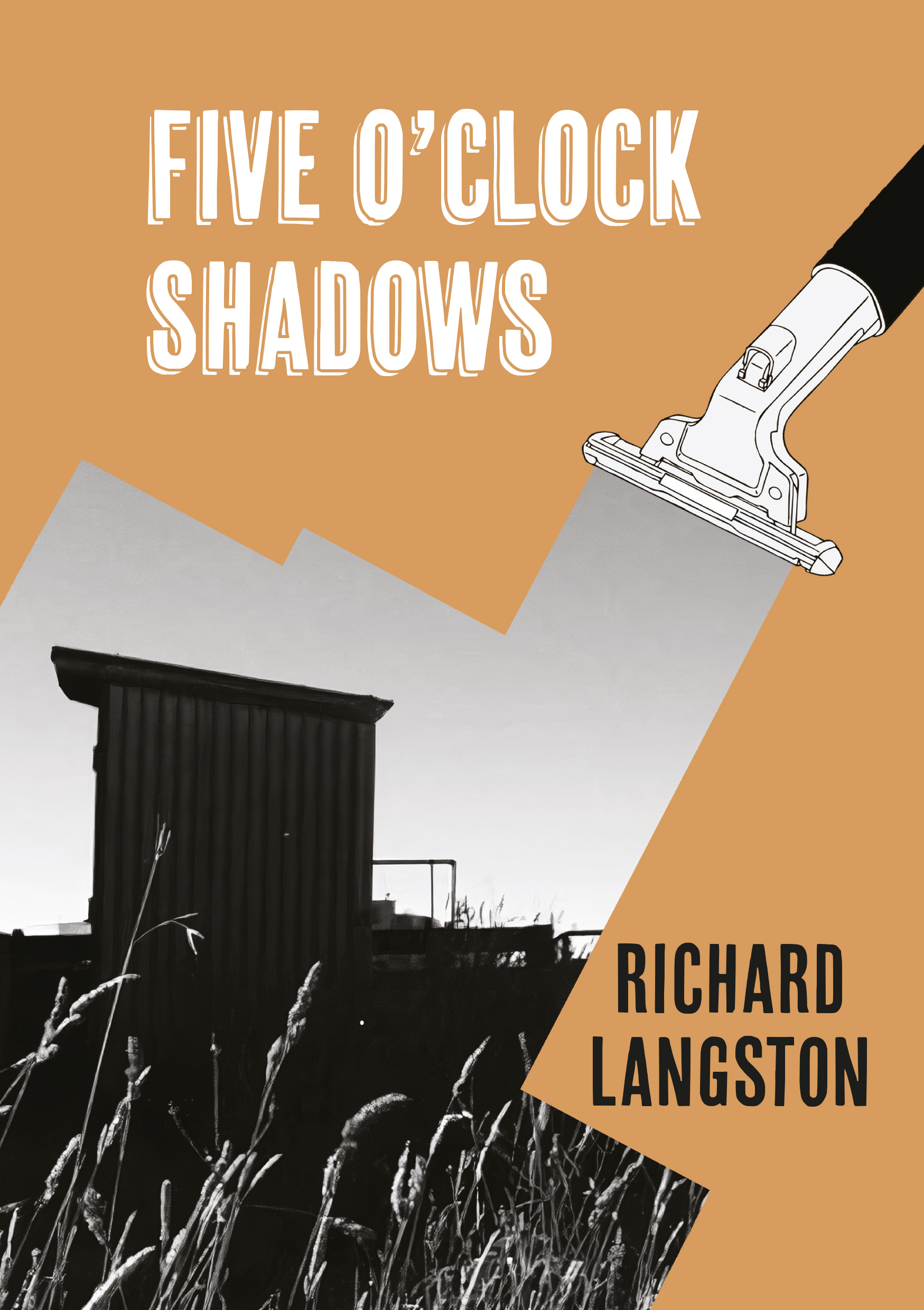
Front cover of Five O'Clock Shawdows, a poetry collection by Richard Langston

I’ve heard Richard Langston read a number of times over the years, and always enjoyed his work, but at the Southern Writers at Te Awe Brandon Library event in October 2020 I was particularly struck by how much I enjoyed the poems from his new collection Five O’Clock Shadows, published by The Cuba Press. So I was keen to read them as well as hear them – and Five O’Clock Shadows, Richard’s sixth collection, doesn’t disappoint.

Richard enjoys a lot of stuff I also enjoy: Dunedin, Wellington, cricket, music. A collection that includes a poem about Brendon McCullum’s 302 vs India at the Basin Reserve, and a poem about how marvellous Dunedin is, has already gone a long way towards securing my loyalty. But it’s some of the poems I’m not pre-wired to enjoy that most stand out for me here – such as “Bsharri, Lebanon” and “Sons”. This is a fine, humanistic collection.

(For the avoidance of doubt: I do not in any way identify with the subject matter of the poem “Snoring”. Not at all.)


Two New Books: “Upturned” by Kay McKenzie Cooke and “I Wish, I Wish” by Zirk Van Den Berg

I’ve been catching up with my reading over the holidays – here are two new books worth your attention, both published by The Cuba Press.

Upturned is a new poetry collection by one of my favourite poets. I Wish, I Wish is the second volume in the Cuba Press Novella series – my climate fiction novella Where We Land was the first in this series.

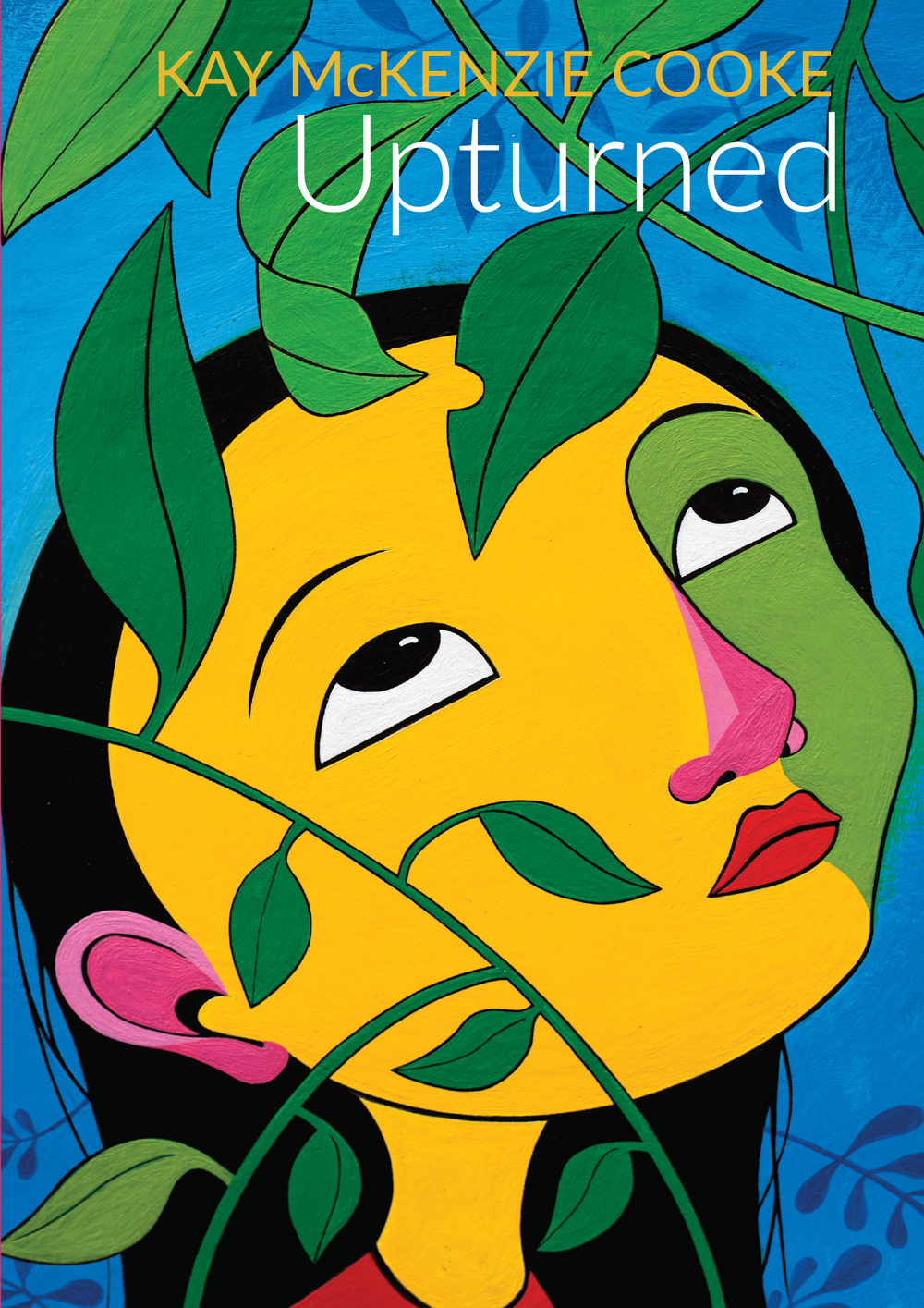
Upturned by Kay McKenzie Cooke.

Kay McKenzie Cooke is one of my favourite poets. Her poetry connects with me on both levels that really matter to me: emotion and language. For me, there’s an extra level of connection in that Kay was born in Murihiku / Southland, where I grew up, and some of her poems feature places I know well and times I’ve experienced.

But even if you have no connection with Southland – or for that matter Berlin, where a section of this collection is set – these poems are likely to speak to anyone who enjoys beautiful, resonant writing that is strongly connected with land, people and memory.

These poems are both highly skilled and very welcoming – this is poetry that invites you in rather than fences you out. So even if you don’t usually read poetry, give Upturned a try. You won’t regret it.

Front cover of Upturned, a poetry collection by Kay McKenzie Cooke


I Wish, I Wish by Zirk Van Den Berg

As the title signifies, I Wish, I Wish is a fairy tale – but it’s a very down-to-earth one. Mortician Seb’s monotonous life is abruptly upturned after he meets a dying young boy called Gabe. At the start of the novella, Seb is thoroughly stuck in an unsatisfying life that’s going nowhere, and by the end … well, read it and find out.

This novella works because Zirk Van Den Berg steers away from sentiment while communicating the protagonist’s emotions effectively. This is a very well-written book, with neat touches of humour that offset what could otherwise be too moralistic a narrative. I wasn’t sure I wanted to start 2021 by reading another story about death, but before long I was caught up in this novella, and I think you will be too.


Front cover of I Wish, I Wish, a novella by Zirk Van Den Berg

Southern Writers at Te Awe Brandon Library – 20 Oct 2020

From the Wellington City Library blog:


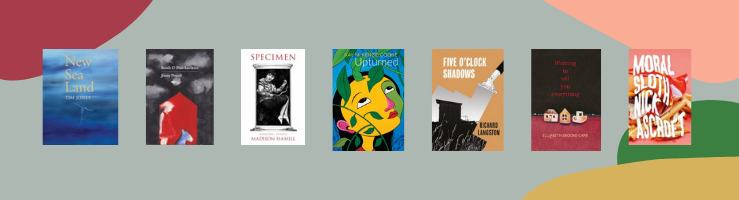
Image shows books by poets taking part in the Southern Writers event
______________________________
20 October 2020
Te Awe Library – 29 Brandon Street
12.30pm to 2pm
______________________________


Join the Facebook event: https://www.facebook.com/events/2763822373868512/

This event inaugurates the Te Awe event space, with six fine poets and prose writers giving a very special lunch time reading. All hail from Dunedin or Southland.

They are:

Kay McKenzie Cooke, Richard Langston, Tim Jones, Nick Ascroft, Madison Hamill and Jenny Powell, with Mary McCallum reading some of the late Elizabeth Brooke-Carr’s work.

So why not take this rare opportunity, grab your lunchtime sandwiches or buy one from the Te Awe café, and enliven your lunch listening to some of New Zealand’s finest poets reading from their works. Enjoy.

Hop across to the Wellington City Library blog for further details of the poets and their latest books!

Images of authors taking part in the Southern Writers events

Tuesday Poetry News: Eye To The Telescope 2 Published: Robots, Time Machines, Aliens, And Joe Dolce

This isn’t, in all conscience, a Tuesday Poem, but it does contain several Tuesday Poets: Issue 2 of Eye To the Telescope, which I edited, has now been published.

Eye To The Telescope is an online magazine recently established by the Science Fiction Poetry Association, and Issue 2 features speculative poetry (that is poetry, in the science fiction, fantasy, horror and associated genres) by Australian and New Zealand poets. The list of contents is:

Editor’s Introduction • Tim Jones
If this is the future … • Helen Rickerby
Born Inside Weather • Les Wicks
Another Wow! Signal • Stephen Oliver
then our mother flew unassisted • Raewyn Alexander
Before Science Stepped In • Rod Usher
Rapunzel • Mary Victoria
Bordertown • Grant Stone
A whimper after the bang • Emily Manger
Man in a wingsuit • Chris Lynch
Mechwarrior Sonnet • Toby Davidson
Radio Wave Propagation in the Roman Warm Period • Catherine Fitchett
Nocturne • Peter Friend
mind sings of mer • Sandi Sartorelli
Yayoi Kusama goes to Iceland • Janis Freegard
In the third poem I am being killed by a water lizard • Cy Mathews
Don’t Shoot the Robot • David Reiter
The Trouble With Time Machines • Alicia Ponder
Extermiknit • Laurice Gilbert
Dhiy uvenjing goest • Tom Clark
Aliens • Joe Dolce

and you can read the introduction, the poems and the contributor bios (which cover Issue 1 as well as Issue 2). You can also keep an eye out for the submission guidelines for future issues.

Here is the press release I sent out about this issue. I hope you enjoy these twenty poems!

Robots, Time Machines, Aliens, And Joe Dolce

When the Science Fiction Poetry Association asked New Zealand poet, author and anthologist Tim Jones to edit an issue of their online magazine “Eye To The Telescope” featuring Australian New Zealand speculative poetry, he didn’t expect to receive a submission from the singer-songwriter behind 1980s hit song “Shaddap You Face” – and he didn’t expect to like it enough to include it in the issue, now online at http://www.eyetothetelescope.com/

“Shaddap You Face” was an Italian-themed novelty song that was absolutely inescapable in the early 1980s. ‘All I knew of Joe Dolce was that he wrote that one song,’ says Tim Jones. ‘What I didn’t know is that he’s also a fine poet, with work published in many of Australia’s leading literary journals. His poem “Aliens” makes a great concluding poem for this issue.’

Speculative poetry covers poetry that fits within the science fiction, fantasy and horror genres, plus other associated genres like magic realism and surrealism. ‘It was really tough to choose only 20 poems from the much larger number of poems I’d like to have published,’ says Tim Jones, ‘but I’m happy to have included such a range of genres and styles.’

The first poem, Helen Rickerby’s “If this is the future….”, uses science fiction as a beautifully delicate metaphor, but there’s also such hard-out science fiction poems as Chris Lynch’s “Man in a wingsuit”. There is apocalyptic menace in Grant Stone’s “Bordertown” and Emily Manger’s “A whimper after the bang”, in contrast to the wry humour of Laurice Gilbert’s “Exterminiknit”.

‘One of the things I’m most pleased about is that this issue brings together well-regarded poets, like Janis Freegard, Stephen Oliver and David Reiter, with authors best known for their fiction, like Mary Victoria and Peter Friend, both of whom contributed poems on fantasy themes, and Spanish-domiciled Australian writer Rod Usher,’ Tim Jones commented. ‘There’s surrealism, a sonnet, and one dialect poem that reminds me of Russell Hoban’s great novel “Riddley Walker”.’

Whether you love poetry, you love SF, fantasy, and horror, or you just want to find out what on earth speculative poetry is, there is something for you in “Eye To The Telescope 2”.

Should New Zealand Have Its Own Section On The Poetry International Web?

I’ve been looking through this week’s Tuesday Poems, and thinking about poems – mine and others’ – I plan to post on forthcoming Tuesdays.

While doing this, I visited the Poetry International Web. Poetry International is a significant organisation: it organises the annual Poetry International Festival in Rotterdam, and it maintains a website with many poems, articles, videos and news.

The website is organised into national sections, each overseen by a national editor, each with its own wealth of material. Australia has a national section; so does Zimbabwe – a particularly impressive one – and Lithuania, and Croatia.

But there is no national section for Aotearoa/New Zealand, presumably because we don’t have a national editor. I think that’s a pity. So I’m wondering, would it be good if we did have a national section, and if so, how could this be brought about?

The Poetry International FAQ includes a list of the requirements for a national editor, and they are not insignificant. But is there anyone out there who meets those criteria and would be willing to take on the job?